











How Can You Tell Normal Vape Behaviour From a Faulty Disposable Vape?
Every vaper has encountered an unexpected quirk at some point, whether it is a cooler draw, a subtle gurgle, or a sudden dip in vapour production. However, learning to distinguish everyday operational shifts from a genuine disposable vape fault is critical for both device satisfaction and personal safety. When performance suddenly feels off, knowing how to run a quick vape quality check helps you distinguish between minor operational quirks and critical defective vape signs. By understanding the boundaries of normal vape behaviour, you can prevent unnecessary frustration and quickly identify when you are dealing with a genuinely faulty disposable vape.
Vaping hardware relies on a delicate balance between lithium battery output, airflow dynamics, e-liquid saturation, and micro-wick heating. When any of these components fluctuate, the sensation of the vape shifts. Here is everything you need to know to separate ordinary device wear from mechanical and electronic defects.
Understanding Normal Vape Behaviour Across a Device's Lifespan
Before jumping to the conclusion that a unit is broken, it helps to understand how modern electronic nicotine delivery systems actually function during ordinary use. No device performs with 100 per cent uniform power from its very first puff to its last.
Natural Battery Sag and Voltage Drop
In unregulated disposable devices or semi-disposable pod systems, power delivery is linked directly to the charge level of the internal cell. When a battery sits at peak charge, vapour production is punchy, warm, and instantaneous. As the cell discharges throughout the day or over its lifespan:
- Vapour volume thins: You may notice slightly lighter clouds towards the end of a charge cycle.
- Draw temperature cools: The heating coil receives fewer volts, resulting in a cooler sensation on the palate.
- Ramp-up time increases: You might experience a half-second delay before the atomiser reaches peak operating temperature.
These changes represent standard operational behaviour rather than an electrical short or hardware failure. For rechargeable pod platforms such as the Iget Bar Plus S3 10000 Peach Lychee Lime Ice, plugging the unit into a low-amp power source restores full vaporisation performance immediately.
Condensation Versus Genuine Leaks
A common point of confusion is moisture pooling around the mouthpiece or air vents. During regular vaping, heated aerosol travels up the central chimney. When warm vapour contacts the cooler interior plastic of the mouthpiece, a portion condenses back into liquid droplets.
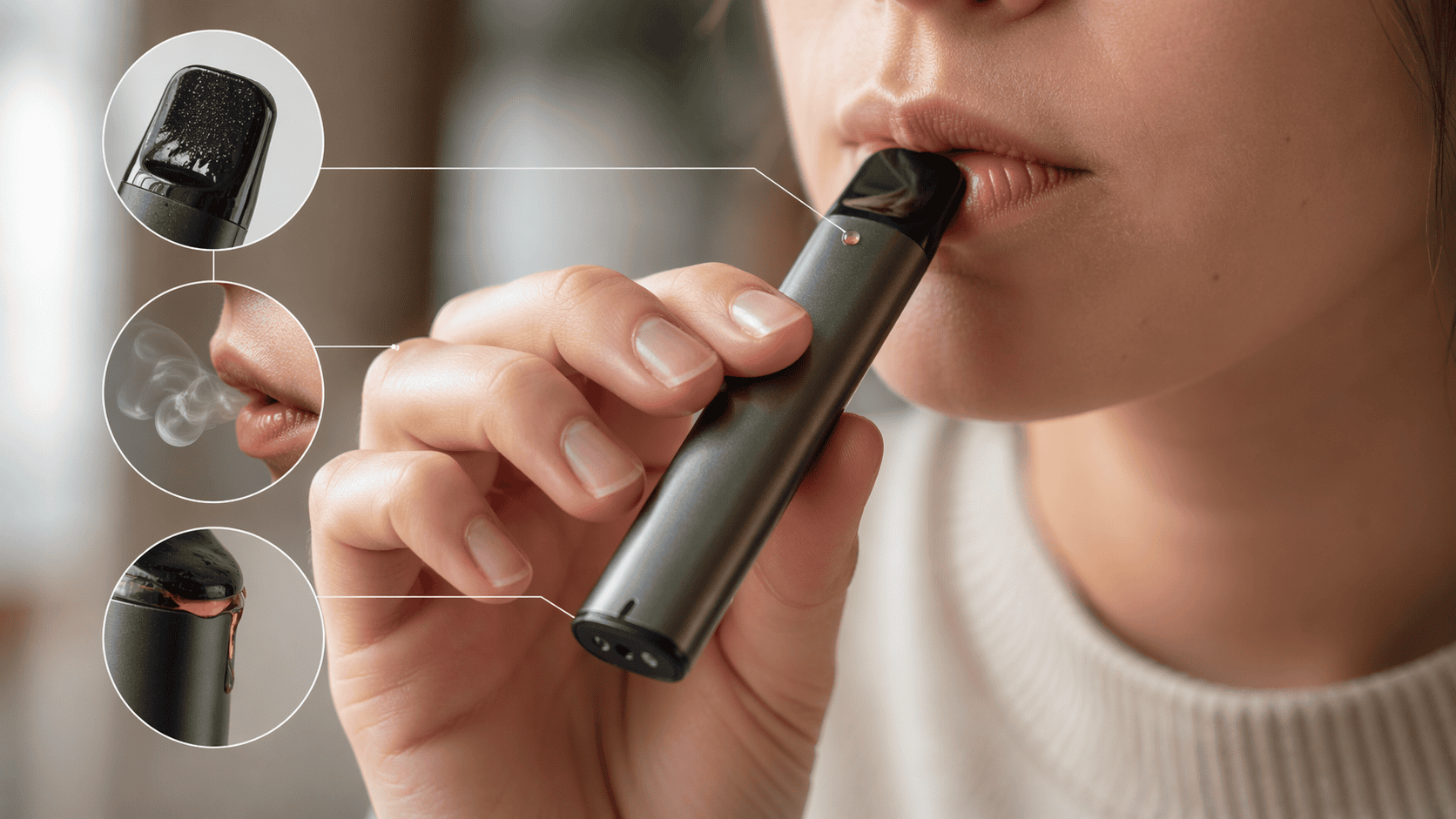
Image comparing condensation around a vape mouthpiece (tiny clear droplets) with a genuine vape leak (larger, sticky liquid seeping from seams).
Condensation is clear or faintly tinted, forms in tiny droplets, and wipes away easily with a tissue. In contrast, a serious hardware seal breach produces heavy, sticky, continuous liquid that seeps out of the base airflow holes or seams.
Flavour Evolution and Sweetener Build-Up
E-liquids with intense sweetener formulations or cooling agents naturally impact the coil over time. Over several hundred draws, caramelised sweeteners form a microscopic film over the coil wire or mesh grid. This can cause:
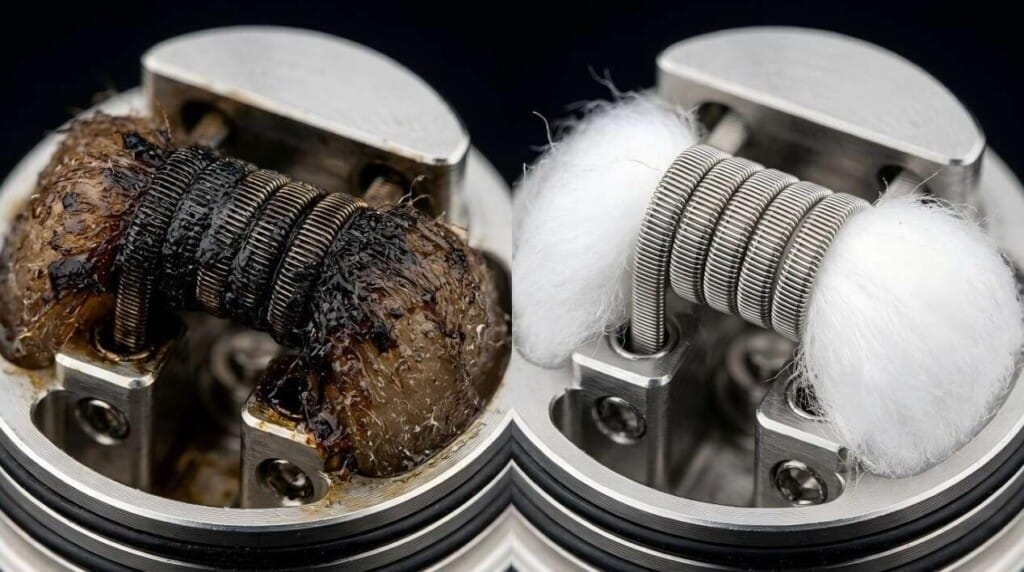
Image comparing condensation around a vape mouthpiece (tiny clear droplets) with a genuine vape leak (larger, sticky liquid seeping from seams).
- A slight reduction in high-note sweetness.
- A mild shift towards warmer, toastier flavour undertones.
- A softening of icy, menthol throat hits.
This gradual maturation is entirely standard. It only crosses into hardware failure if the flavour transforms instantaneously into an acrid, sharp, chemical taste.
Spotting Defective Vape Signs: When It Is a Genuine Disposable Vape Fault
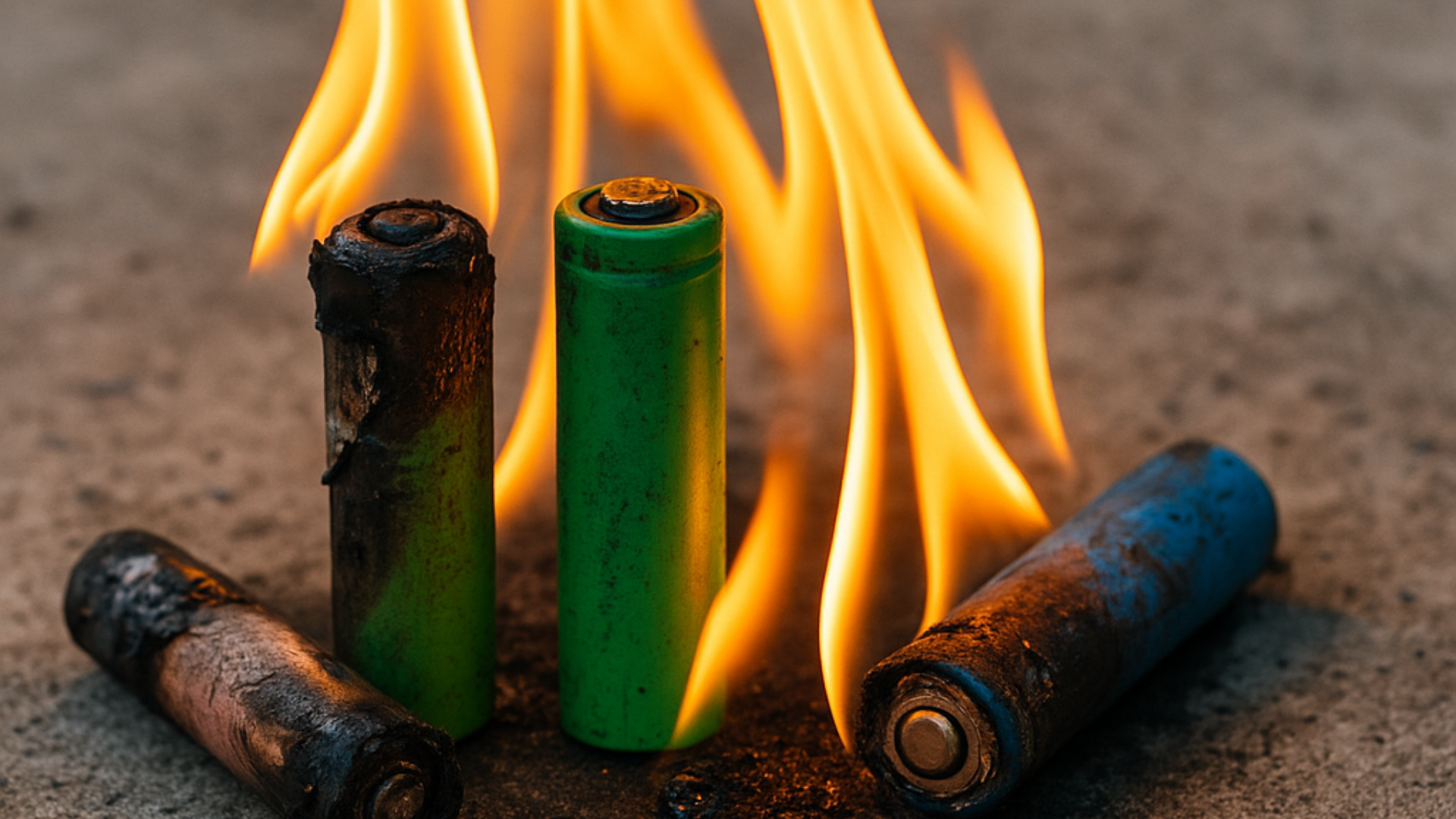
While performance fluctuations are common, genuine internal defects demand immediate attention. Operating a broken unit poses risks ranging from burnt dry hits to battery venting.
Continuous Auto-Firing
One of the most dangerous mechanical faults is auto-firing, where the unit continues heating after you have finished inhaling, or activates spontaneously on a table.
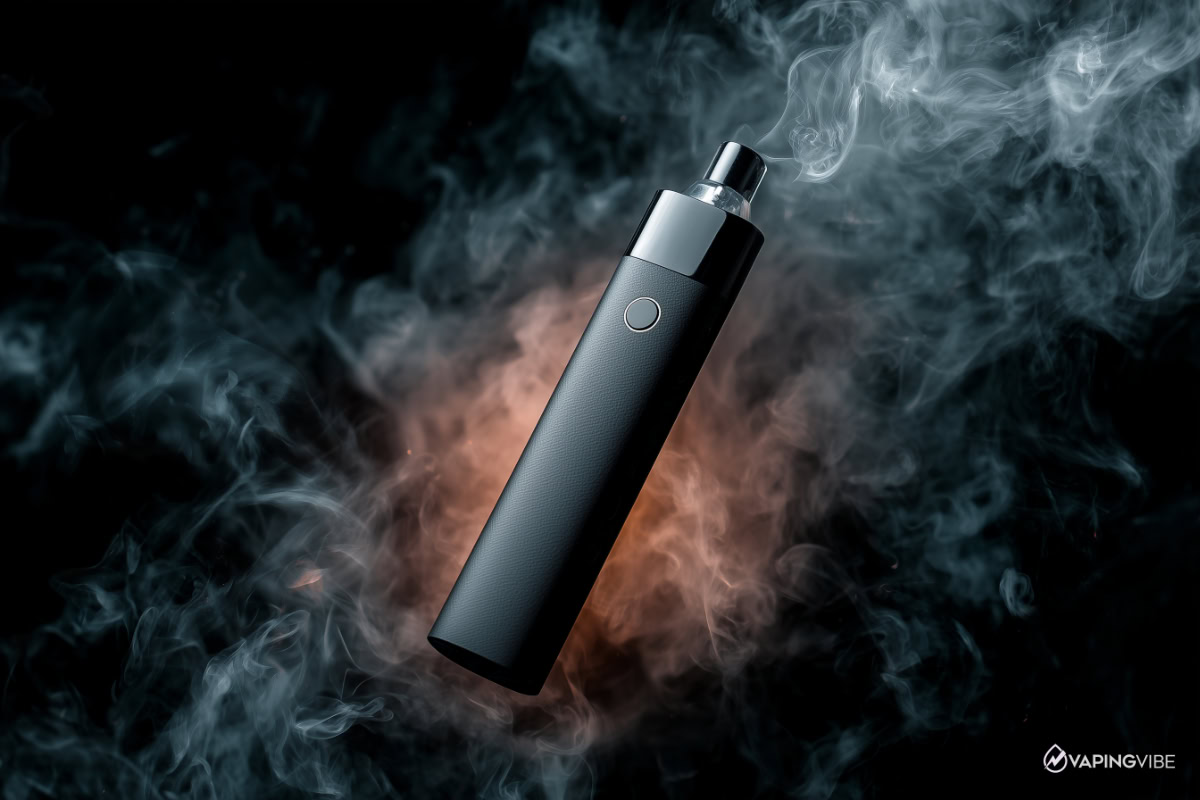
Image of a vape device spontaneously heating or emitting smoke, indicating auto-firing or malfunction, placed on a non-combustible surface.
- The Cause: Most draw-activated devices rely on a microscopic silicone pressure diaphragm or microphone sensor. If condensation or manufacturing debris enters this sensor, the switch can stick in the "on" position.
- The Risk: Continuous current flow causes rapid overheating, coil burnout, melted casing, and potential thermal failure in the lithium cell.
- The Action: If a device hums, crackles, or grows hot while unattended, isolate it immediately on a non-combustible surface outdoors and retire it.
Immediate and Unrelenting Burnt Hits
A scorched hit is distinct from a dull flavour. It creates a harsh, acrid burning sensation in the throat that makes inhaling impossible.
If this happens on a fresh unit with an intact e-liquid supply, you are dealing with dry wick starvation. This occurs when internal cotton or ceramic wicking is misaligned during factory assembly, preventing e-liquid from saturating the heating element. Unlike temporary wicking lag caused by rapid chain-vaping, a factory-starved wick will never recover and indicates a defective build.
Excessive Casing Heat and Swelling
Vapes naturally become mildly warm during repeated use, particularly around the heating chamber. However, heat radiating from the battery section is an urgent red flag:
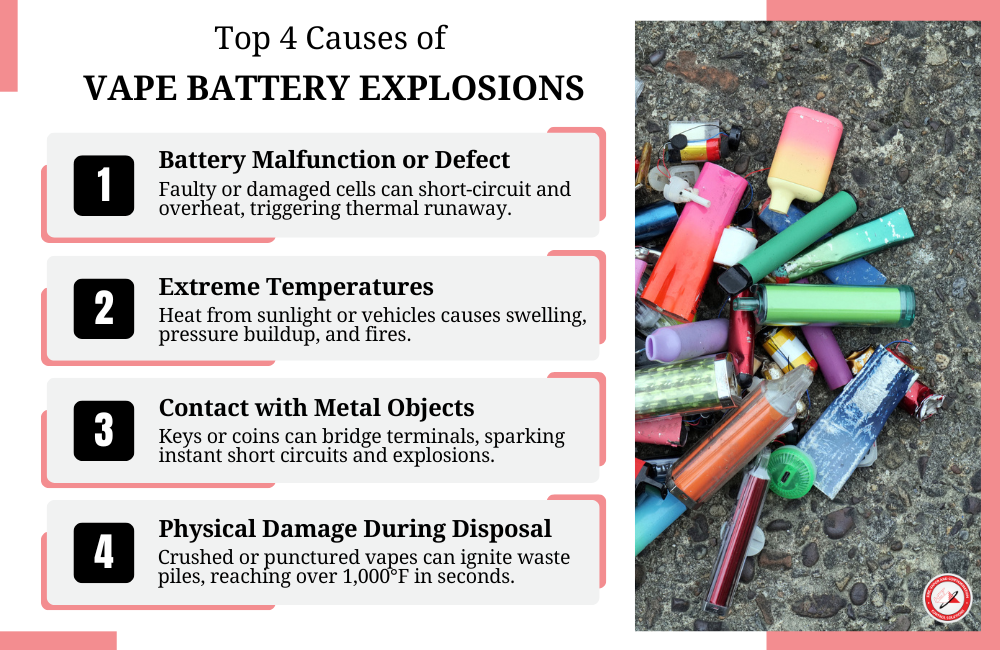
Image of a disposable vape with a visibly swollen or distorted casing, indicating a dangerous internal battery fault.
- Excessive surface heat: If the battery housing becomes too hot to comfortably hold in your palm.
- Casing distortion: If the plastic shell or aluminium tube bulges, warps, or shows stress cracks along the seams.
- Unusual odours: The smell of hot plastic, scorched electronics, or ozone escaping from the airflow port.
These physical indicators show that the internal lithium-ion pouch has suffered physical damage or internal shorting. Continued use creates an extreme safety hazard.
Comparison: Normal Vape Variation vs Defective Device Indicators
To help you assess your hardware at a glance, use the reference table below to categorise what you are experiencing.
| Symptom / Observation | Normal Vape Behaviour | Genuine Disposable Vape Fault | Immediate Action |
|---|---|---|---|
| Vapour Output | Gradually thins out as battery drains or e-liquid naturally nears empty. | Ceases instantly despite full charge and visible liquid; indicator light shows no response. | Clean connection pins; if dead, dispose of responsibly. |
| Flavour Quality | Mild drop in punchiness or sweetness after extended use. | Sharp, pungent chemical or burnt taste from the very first draw. | Stop inhaling; dry wick defect cannot be reversed. |
| Device Temperature | Slight, gentle warmth around the atomiser head during chain-vaping. | Scalding heat emanating from the battery base; casing feels swollen or distorted. | Quarantine on a hard, non-flammable surface outdoors. |
| Moisture / Fluid | Light moisture beads or condensation inside the tip that wipe away easily. | Sticky liquid pooling out of airflow holes, seams, or charging port. | Wipe clean; discard immediately if leaking directly into electronics. |
| Activation Response | Fires cleanly on inhale; small half-second crackle as coil reaches temperature. | Hisses, heats up, or crackles without inhaling (auto-firing), or refuses to cut off. | Place in an open, fire-safe area; do not store in pockets or bags. |
| LED Light Feedback | Flashes predictably to signal a flat battery, charging status, or 8–10 second cutoff. | Erratic, continuous flickering, strobe sequences, or light remaining permanently lit. | Electronic sensor short; discontinue use immediately. |
Performing a Safe Vape Quality Check Before Writing Off Your Device
Before retiring a device that appears unresponsive, working through a structured vape quality check can often resolve simple, non-hazardous issues.
- STEP-BY-STEP DEVICE AUDIT
-
- Visual Inspection → Check casing for cracks, bulges, leaks
-
- Airflow Clearance → Verify no lint or factory seals block vents
-
- Connection Cleaning → Dry connection pins and pod seating points
-
- Controlled Test Draw → Take a gentle 1-second primer puff
1. Check for Packaging and Airflow Blockages
It may sound obvious, but modern hardware arrives heavily sealed to preserve shelf freshness. High-capacity devices like the Iget Moon K5000 Blueberry Dragon Fruit Lemon Ice feature protective silicone plugs in the top mouthpiece and protective adhesive stickers over the bottom air intake. If the bottom sticker is partially peeled, airflow is constricted, mimicking a failing draw sensor. Ensure all packaging seals are cleanly removed.
2. Inspect and Clean the Airflow Vents
Carrying devices in pockets or bags regularly attracts lint and dust. Debris lodged inside the lower airflow hole restricts air volume, causing the sensor to sputter or fail to trigger. Gently clear the airflow cavity using a dry wooden toothpick or soft brush—never use metallic pins or needles that could pierce an internal battery cell.
3. Clear Pod Wells and Contact Pins
If you are using modular hardware from manufacturers like Umin, intermittent firing is often caused by dirty contact points. Condensation can collect beneath the pod cartridge, blocking the spring-loaded brass pins from making clean electrical contact.
Remove the pod, take a dry cotton bud, and firmly wipe the brass contacts and magnetic housing. Ensure both pins depress and spring back freely before reinserting the cartridge.
4. Decode the Indicator Light
Take note of the LED indicator pattern when taking a draw:
- 10 slow flashes: Typically indicates standard low-voltage cutoff (the battery needs recharging).
- 3 rapid flashes: Usually signals a short-circuit protection lockout.
- Solid light that does not fade: Points to an activated micro-switch or moisture-locked board.
When to Retire and Responsibly Dispose of a Faulty Device in Australia
If your troubleshooting confirms an internal failure—especially an electrical short, auto-fire defect, or battery swelling—the device must be decommissioned immediately.
Why Defective Vapes Must Never Enter Household Rubbish
A broken or punctured lithium-ion battery represents a major fire hazard. When vapes are thrown into ordinary council rubbish or kerbside yellow recycling bins, they are compacted inside collection trucks and sorting facilities. Crushing a compromised lithium cell can trigger intense battery fires that damage equipment and endanger municipal waste workers.
Close-up macro shot of a vape coil showing dark residue or caramelized sweetener buildup, demonstrating flavor evolution.
Safe Handling Protocols for Defective Hardware
If your vape shows physical defects:
- Never immerse it in water: While it might seem intuitive to extinguish a hot device, exposing damaged lithium cells to water can accelerate shorting and hazardous gas production.
- Quarantine the unit: Place the damaged vape outdoors or on a concrete surface away from timber furniture, paper, or carpeted areas until it cools completely.
- Cover the contact points: If terminals or USB ports are exposed, cover them with non-conductive electrical tape.
- Use specialised e-waste drop-offs: Take the unit to a certified electronic waste recycler, council chemical clean-up station, or dedicated battery disposal kiosk (such as B-cycle drop-off points located across Australian retail hubs).
Practical Takeaway: Staying Safe and Informed
Experiencing minor shifts in vapour density, mild temperature changes, and flavour softening over time is a normal part of how e-liquid vaporises and batteries discharge. However, issues like persistent auto-firing, intense casing heat, unyielding burnt hits, and visible physical distortion are clear indicators of a defective device.
By paying attention to these physical warning signs and following straightforward maintenance checks, you can quickly determine whether your device simply needs a charge, a quick clean, or safe, prompt disposal.

 UMIN SLICK PLUS 10000
 ALIBARBAR INGOT 9000
 IGET BAR PRO 10000
 IGET ONE 12000
 IGET BAR PLUS S3 10000
 IGET BAR PLUS S3 POD 10000
 IGET MOON K5000
 GEEK BAR PULSE X 25000