











What Is a Draw-Activated Vape and How Does It Work?
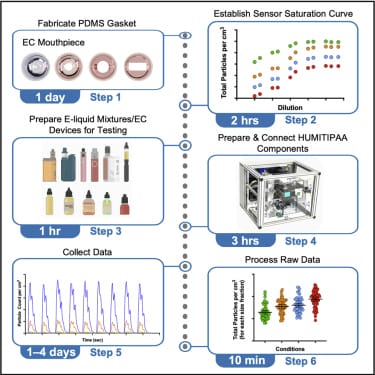
A simplified block diagram illustrating the operational steps of an auto-draw vape, from inhale to vaporisation.
For anyone stepping away from traditional smoking or exploring modern vaping hardware, simplicity is often the top priority. A draw activated vape—frequently referred to as an auto draw vape—removes the need for physical fire buttons, screen menus, or complex wattage dials. Instead, the device relies on a subtle internal sensor that detects your inhale and instantly triggers vapour production.
Whether you are curious about what is the healthiest vape setup for your lifestyle or simply trying to understand how disposable vape works on an engineering level, understanding this button-free mechanism helps you get better performance, prevent device failure, and maintain your gear properly.
The Core Mechanics: How an Auto Draw Vape Operates

An illustrative warning showing a do not blow into vape symbol, depicting potential damage to the internal sensor or liquid flooding.
At first glance, a buttonless vapouriser seems almost magic: you draw on the mouthpiece, and vapour appears immediately. However, the underlying hardware relies on straightforward pneumatic physics and micro-electronics.
[Inhale on Mouthpiece]
        ↓
[Drop in Internal Air Pressure]
        ↓
[Pneumatic Diaphragm Flexes Forward]
        ↓
[Electrical Circuit Closes]
        ↓
[Battery Powers Heating Coil]
        ↓
[E-Liquid Vaporises Instantly]
1. The Pneumatic Airflow Sensor
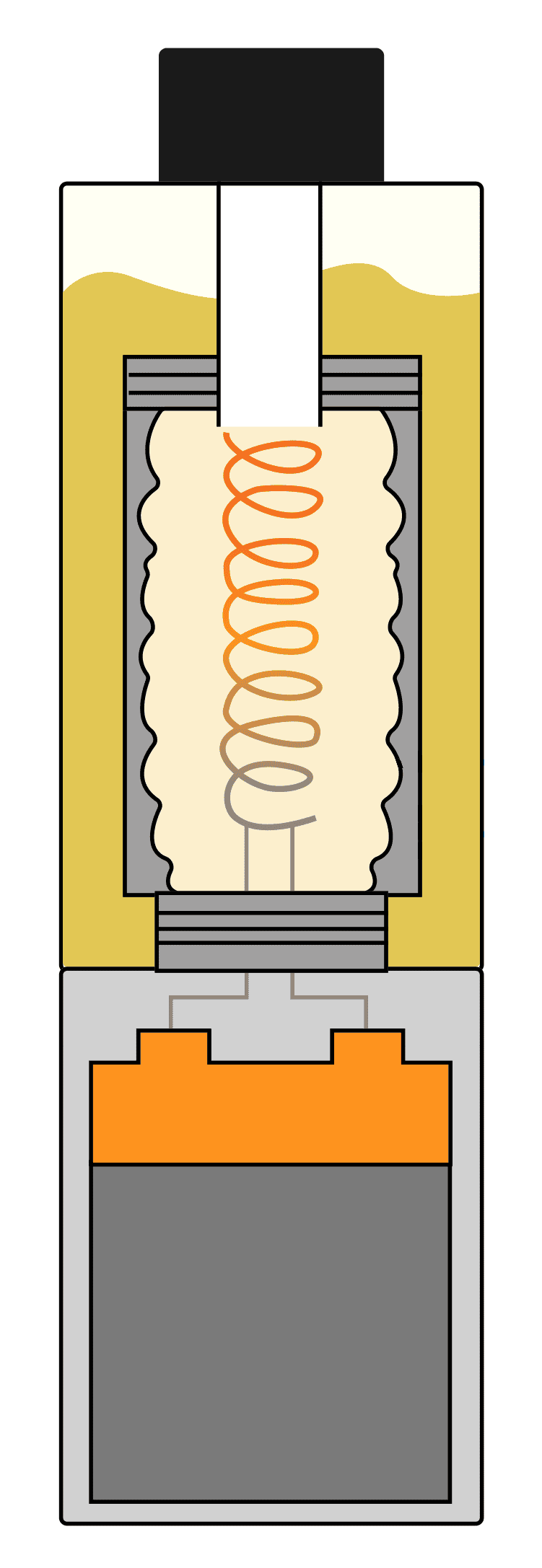
A detailed cutaway diagram showing the internal architecture of a disposable vape, highlighting components like the battery, reservoir, atomiser, and sensor.
The heart of every draw-activated setup is a miniature pneumatic airflow switch. Inside the device channel sits a tiny, highly flexible silicone or metal membrane suspended near an electrical contact point. When the device is resting, this membrane stays in a neutral position, keeping the electrical circuit open and inactive.
2. The Pressure Drop Mechanism
When you place your lips on the mouthpiece and inhale, you create a slight vacuum within the airflow pathway. This low-pressure zone pulls the flexible diaphragm forward. The physical movement bridges the gap between the contacts, completing the electrical circuit between the battery and the atomiser coil.
3. Immediate Power Delivery and Cut-Off
As long as you continue to pull air through the channel, the circuit remains closed, delivering steady current to heat the coil (typically made of fine mesh or porous ceramic). The moment you break the seal and stop inhaling, ambient pressure equalises inside the chamber. The membrane snaps back to its resting state, severing the connection and instantly cutting off power to the heating element.
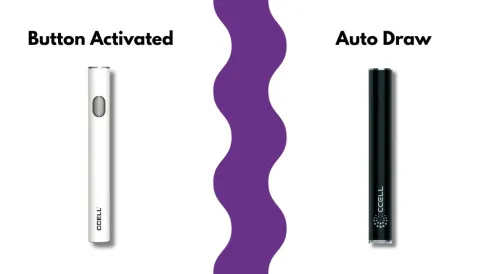
Draw-Activated vs Button-Activated Vapourisers: Key Differences

A detailed cross-section diagram of a vapes pneumatic airflow sensor, showing the flexible membrane and electrical contact points.
While both hardware styles vaporise liquid through resistance heating, their operation, daily usability, and internal construction differ significantly.
| Feature | Draw-Activated (Auto-Draw) | Button-Activated (Manual Fire) |
|---|---|---|
| Activation Method | Inhale-triggered pneumatic switch | Manual physical button press |
| User Experience | Intuitive, mimics traditional cigarette draw | Requires manual coordination |
| Pocket Safety | Cannot misfire from mechanical pressure | Risk of accidental firing if unlocked |
| Airflow Path | Sealed channel over internal sensor | Direct channel, independent of switch |
| Control Precision | Fixed or airflow-dependent output | Granular wattage and preheat options |
| Maintenance Sensitivity | Highly sensitive to internal condensation | Resistant to minor leaks in the chamber |
Manual button devices give experienced users precise control over preheating routines and high-wattage adjustments. In contrast, draw-activated hardware focuses on a streamlined, tactile experience. Many contemporary pod systems and all-in-one disposables—such as select models from Umin or the Alibarbar Ingot 9000 Ribena product range—adopt this pneumatic switch design to keep the daily routine as effortless as possible.
How Disposable Vape Works: Internal Architecture
A sleek, buttonless draw-activated vape device, highlighting its simple design and modern aesthetic.
To understand how single-use and pod-based auto-draw units function from top to bottom, it helps to look at the primary components packed inside the chassis:
- The Mouthpiece & Chimney: Directs vapour from the central core to your lips while managing internal condensation collection.
- E-Liquid Reservoir: Holds the liquid, typically spanning capacities from compact 0.3 mL or 0.5 mL cartridges up to larger multi-millilitre reservoirs.
- Atomiser & Wick: Surrounds the heating coil with absorbent material (such as organic cotton or porous ceramic) that continuously draws liquid to the heated surface.
- Microphone-Style Sensor: Positioned directly in the intake path between the base air intake and the coil to monitor subtle pressure fluctuations.
- Integrated Battery Cell: Supplies low-voltage DC power to the circuit board and coil upon sensor activation.
When evaluating distinct flavour profiles in large-capacity formats—such as an Alibarbar Ingot 9000 Black Forest—the underlying engineering remains the same: steady airflow over the pneumatic membrane maintains consistent liquid vaporisation from the first draw to the last.
Critical Care: Why You Must Never Blow Into an Auto-Draw Vape
An illustrative warning showing a
The single most common way users accidentally ruin an auto-draw device is by blowing into the mouthpiece rather than inhaling.
Because the pneumatic sensor relies on a delicate, one-directional flexible membrane, reverse air pressure behaves like a blunt hammer against the switch mechanism.
- Membrane Inversion: Blowing outward forces the diaphragm backwards past its engineered resting threshold, causing it to warp or dislodge permanently.
- Sensor Lock: Once deformed, the switch may stay permanently in contact with the circuit, causing the device to continuously fire until the battery dies or the coil burns out.
- Liquid Flooding: Reverse airflow pushes pooled condensation directly down the central chimney into the micro-sensor housing, causing electrical shorts or sensor corrosion.
Crucial Rule: If your device airway feels slightly tight or restricted, never blow down into the mouthpiece to clear it. Instead, remove the pod (if using a modular system) and clear the airway gently using a cotton bud.
Common Troubleshooting for Draw-Activated Devices
Even well-engineered draw-activated hardware can occasionally encounter sensor-related hiccups. Here is how to diagnose and resolve the most common issues:
1. The Device Does Not Fire on Inhale
- Check the Air Inlets: Ensure your fingers or hand are not inadvertently covering the tiny air intake pinholes on the sides or base of the casing.
- Inspect the Sensor Chamber: For pod systems, remove the pod and check for e-liquid or condensation pooling around the gold contact pins. Use a clean tissue or cotton bud to dry the area thoroughly.
- Adjust Your Draw Technique: Auto-draw sensors require a steady, moderate pull to generate sufficient negative pressure. Extremely weak or tentative puffs might fail to flex the membrane sufficiently.
2. The Coil Continues Sizzling After You Stop Drawing
- Residual Heat vs Sensor Lag: A very brief, quiet sizzle (under half a second) is normal as the coil sheds residual thermal energy.
- Sticking Switch: If the vapour continues billowing after you pull away, the membrane switch may be sticking due to internal residue. Disconnect the pod immediately or tap the base of the device gently on a flat surface to help the membrane unstick.
Practical Takeaways for Australian Adult Users
Draw-activated vapourisers offer an intuitive, button-free experience by translating the natural mechanics of inhalation into immediate vapour delivery. By keeping the internal contacts free of e-liquid build-up and avoiding reverse airflow through the mouthpiece, you can ensure consistent performance and longevity from any auto-draw device.





 UMIN SLICK PLUS 10000
 ALIBARBAR INGOT 9000
 IGET BAR PRO 10000
 IGET ONE 12000
 IGET BAR PLUS S3 10000
 IGET BAR PLUS S3 POD 10000
 IGET MOON K5000
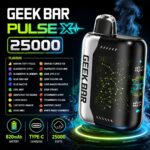 GEEK BAR PULSE X 25000