











Tight vs Airy Vape Draw: What’s the Difference? (2026 Guide to Vape Airflow)
When picking up an e-cigarette or pod device, one of the first things you will notice is how it feels when you take a puff. Some devices feel like sipping a thick milkshake through a narrow straw, requiring deliberate suction, whilst others feel like taking a deep, unrestricted breath of fresh coastal air. This fundamental distinction comes down to your setup's intake configuration. Understanding how a tight vape draw, airy vape draw, vape airflow balance impacts your daily vape can completely transform your experience, whether you are chasing intense flavour, distinct throat hit, or massive vapour clouds.

Infographic comparing Mouth-to-Lung (MTL) and Direct-to-Lung (DTL) vaping styles, highlighting differences in inhalation, resistance, vapor production, and more.
Airflow is the engine room of any vaporiser. It governs how much oxygen mixes with the aerosolised e-liquid, how quickly the coil cools down, and how the vapour travels into your mouth or lungs. If you have ever wondered why two different devices loaded with the exact same e-liquid can taste completely different, airflow resistance is almost certainly the deciding factor.
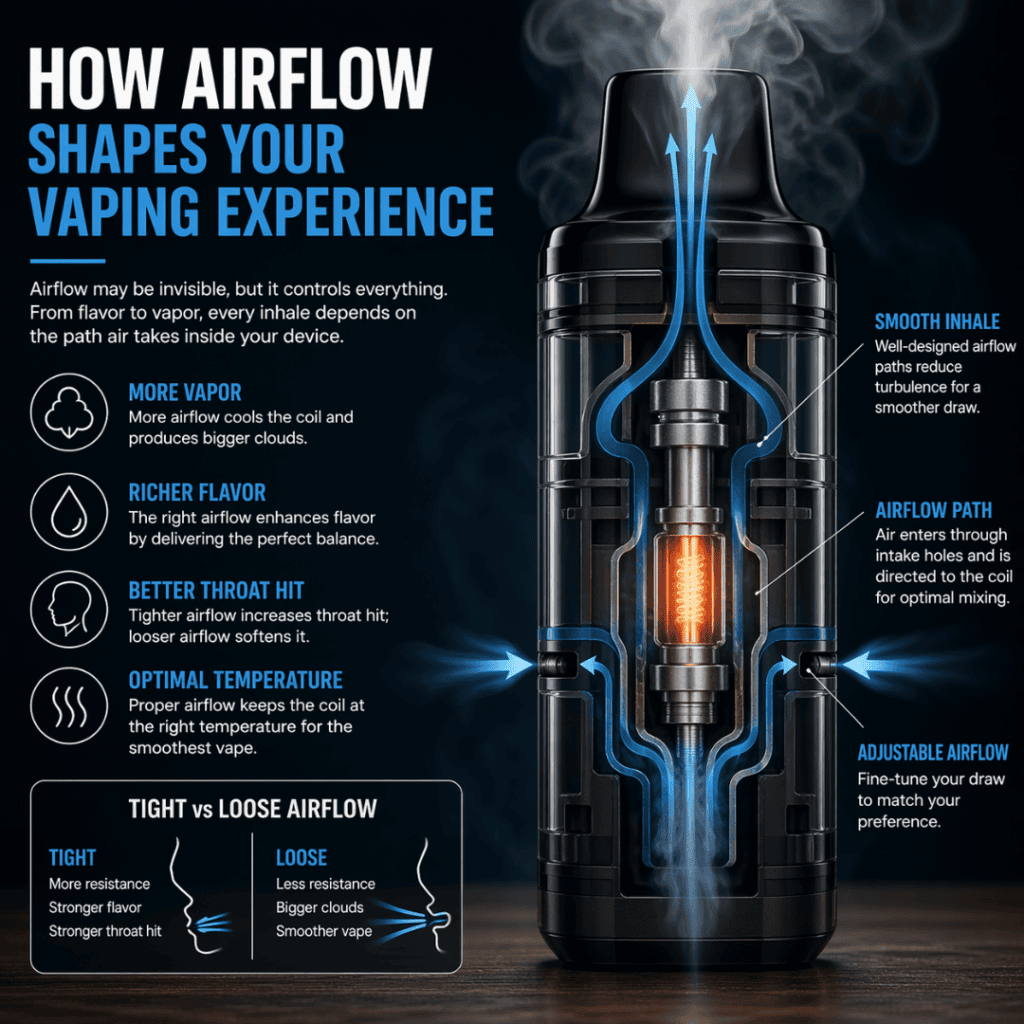
Diagram illustrating the internal airflow path within a vape device, showing how air enters, passes the coil, and mixes with vapor.
Understanding Vape Airflow: What Does Draw Resistance Actually Mean?
At its simplest, draw resistance refers to the amount of suction pressure required to pull air through your device's intake vents, past the heating element, and out the mouthpiece.
When a device has restricted air intake, less ambient air enters the chamber during an inhale. This restriction creates a tight draw. Because the volume of incoming air is limited, the vacuum created in the atomising chamber pulls vapour into your mouth at a higher concentration and temperature.
Conversely, when the intake ports are opened wide, outside air rushes freely through the atomiser. This creates an airy draw, offering minimal resistance. The increased volume of air dilutes the vapour stream, generating cooler, voluminous clouds.
Modern vaping hardware handles this mechanical balance in several ways:
- Fixed Airflow Ports: Found mostly on basic disposable pens or entry-level pod systems, where the intake size is pre-engineered for a specific inhalation style.
- Adjustable Airflow Control Rings: Common on sub-ohm tanks and rebuildable atomisers, allowing you to twist a textured ring to open or close intake slots incrementally.
- Toggle Switches and Sliders: Built into modern pod kits to allow quick switching between loose and restricted draws.
- Interchangeable Airflow Pins: Precision inserts fitted directly beneath the coil inside custom atomisers to fine-tune the internal air jet.
Image of a person taking a Mouth-to-Lung (MTL) vape draw, with a subtle vapor cloud, mimicking the sensation of smoking a traditional cigarette.
Tight Vape Draw vs Airy Vape Draw: The Core Differences Explained
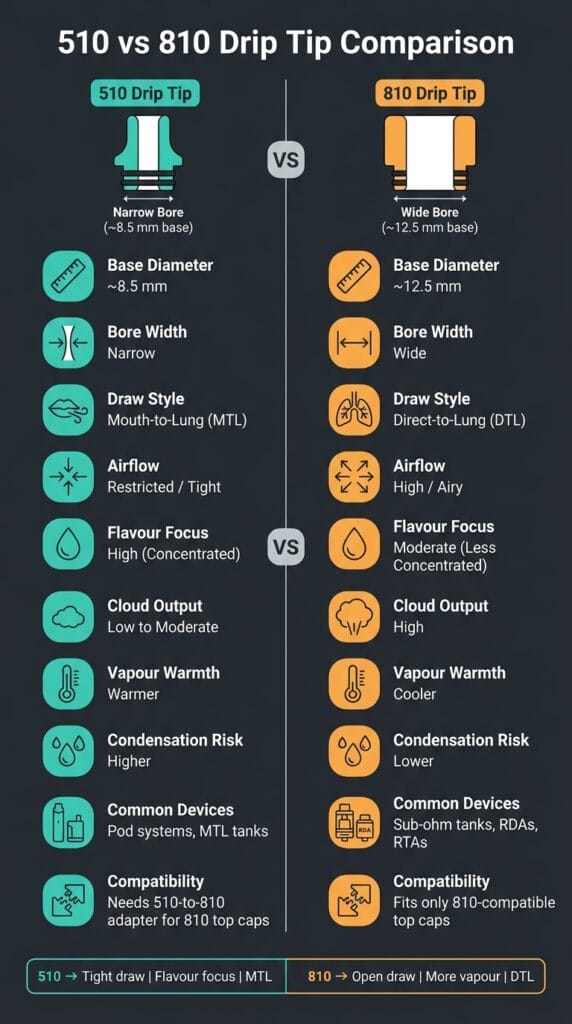
The choice between a restricted and an open inhalation style defines the two primary categories of vaping: Mouth-to-Lung (MTL) and Direct-to-Lung (DTL).
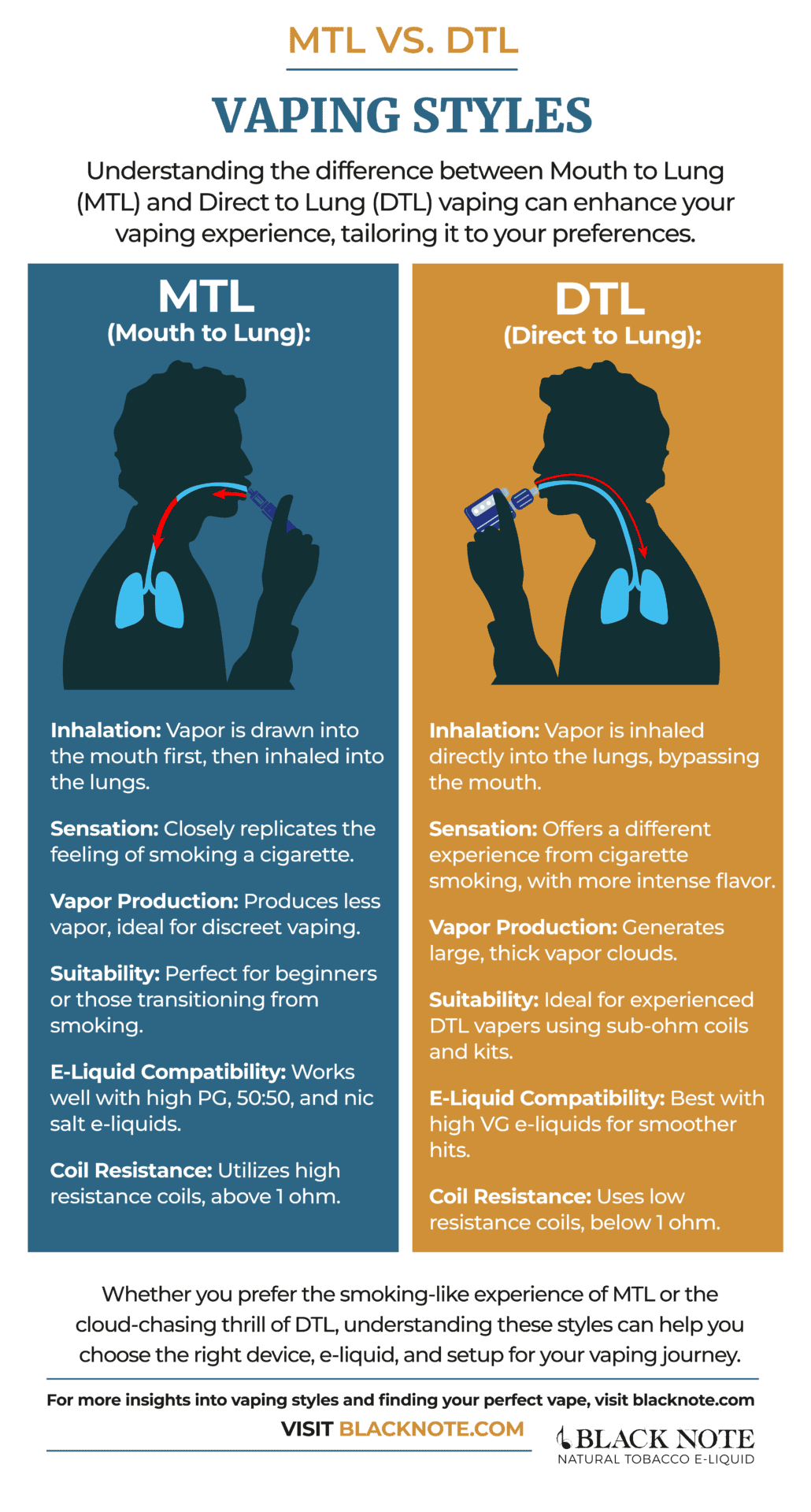
Image comparing the sensation of a tight vape draw (like sipping a thick milkshake through a narrow straw) to an airy vape draw (like taking a deep, unrestricted breath of fresh air).
- Feature — | Tight Vape Draw (MTL) — | Airy Vape Draw (DTL)
- Inhalation Style — | Mouth-to-Lung (two-step inhale) — | Direct-to-Lung (straight to chest)
- Airflow Resistance — | High (restricted, firm pull) — | Low (open, minimal resistance)
- Vapour Temperature — | Warm to hot — | Cool to lukewarm
- Vapour Production — | Discreet, subtle clouds — | Dense, voluminous clouds
- Flavour Concentration — | Sharp, concentrated, defined notes | Mellow, blended, wide flavour body
- Throat Hit Intensity — | Pronounced and sharp — | Smooth and gentle
- Typical Nicotine Level | Medium to High (e.g. Nic Salts) — | Low (e.g. 3 mg/mL to 6 mg/mL)
- E-Liquid Consumption — | Low (economical) — | High (rapid consumption)
The Tight Draw Experience (Mouth-to-Lung)
A tight draw closely mirrors the physical sensation of smoking a combustible cigarette. You draw vapour into your mouth first, hold it for a split second, and then inhale it down into your lungs.
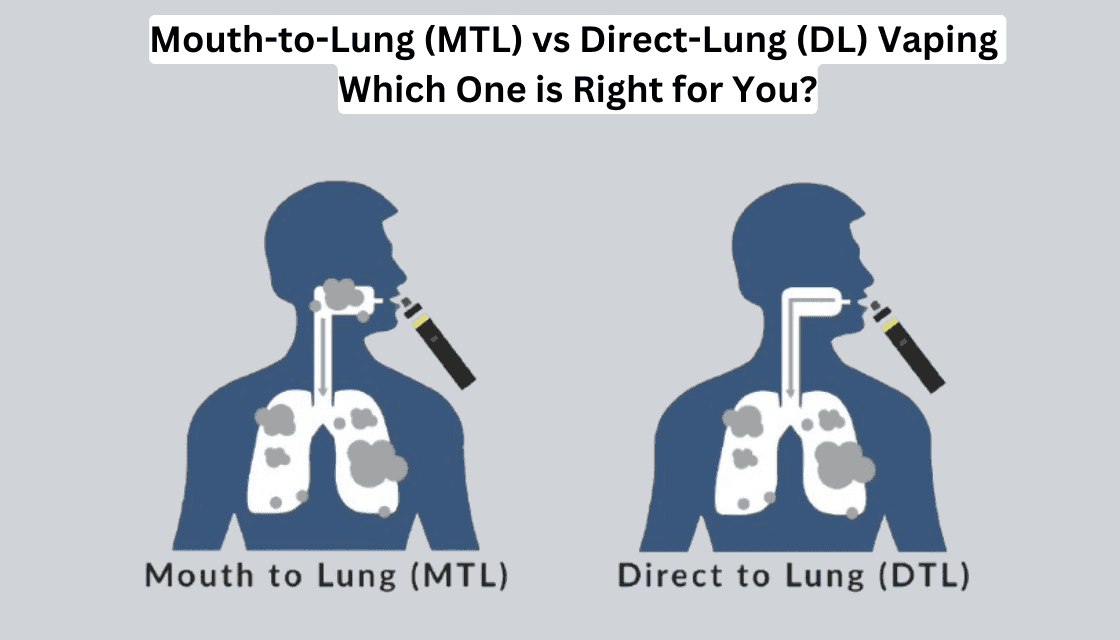
Image of a person taking a Mouth-to-Lung (MTL) vape draw, with a subtle vapor cloud, mimicking the sensation of smoking a traditional cigarette.
Because the airflow is constricted, the heating coil operates in a confined chamber with less incoming air to cool it down. This results in a warmer, more concentrated puff that delivers a punchy throat hit. It is the preferred choice for people seeking a familiar sensation when transitioning away from smoking, as well as vapers who prefer discreet vapour production in public settings.
The Airy Draw Experience (Direct-to-Lung)
An airy draw removes the physical restriction, encouraging you to inhale vapour directly into your lungs in one continuous, deep breath—much like inhaling through a snorkel.
With an airy draw, a substantial rush of cool ambient air sweeps across the coil. This prevents the heating element from overheating at higher power outputs, producing massive, room-filling clouds of smooth, cooler vapour. Cloud chasers and enthusiasts who enjoy complex, multi-layered dessert or beverage flavour profiles often gravitate towards open airflow setups.
How Vape Airflow Influences Flavour, Heat, and Nicotine Satisfaction
Your airflow setting alters the chemical and physical characteristics of every single puff. Modifying the air-to-vapour ratio directly shifts the way your palate and throat perceive the aerosol.
- Airflow Openness: — Tight / Restricted → Open / Airy
- Vapour Volume: — Discreet Clouds → Massive Clouds
- Vapour Heat: — Warm & Intense → Cool & Smooth
- Throat Hit: — Sharp & Solid → Soft & Gentle
1. Flavour Definition vs Flavour Volume
Flavour perception changes dramatically based on draw resistance:
- On a tight draw: The vapour remains highly concentrated. Individual top notes—such as the sharp tartness of berries, crisp citrus, or distinct tobacco undertones—stand out clearly because the aerosol is not heavily diluted with ambient air.
- On an airy draw: The increased air volume disperses the vapour across a broader surface area of your palate. While individual notes might feel less punchy, complex flavour bases like creams, pastries, and blended custards often taste rounder and smoother.
2. Temperature Management
A tight draw restricts air cooling, meaning the coil stays significantly warmer during firing. This warmth accentuates rich flavours and produces a comforting, authentic sensation in the throat. Conversely, an airy draw continuously bathes the coil in fresh air, keeping the vapour temperature low even when firing at higher wattages.
3. Nicotine Delivery and Throat Hit
Nicotine delivery is heavily dependent on draw style:
- High-strength nicotine e-liquids (including nicotine salts) pair best with a tight draw. Because the volume of vapour produced per puff is modest, higher nicotine strengths provide immediate satisfaction without overwhelming the respiratory tract.
- If you tried to vape high-strength nicotine with a completely open, airy draw at high wattage, the massive volume of vapour delivered straight to your lungs would cause an uncomfortable, harsh throat burn. As a result, airy setups typically rely on low-strength freebase e-liquids (such as 3 mg/mL or 6 mg/mL) to deliver a satisfying, smooth hit across larger lung volumes.
Restricted Direct-to-Lung: Balancing a Tight Vape Draw and an Airy Vape Draw
You do not always have to choose between extreme restriction and completely unrestricted airflow. In recent years, the industry has embraced Restricted Direct-to-Lung (RDL) vaping as the perfect middle ground.
RDL provides just enough airflow to allow a direct inhale into the lungs, but with a noticeable, satisfying resistance that prevents the vapour from feeling too cool or diluted. It delivers the best of both worlds: richer flavour saturation and moderate vapour production without guzzling through e-liquid at extreme rates.
Image of a vaper experiencing a Restricted Direct-to-Lung (RDL) draw, showing a moderate vapor cloud and a comfortable, semi-restricted inhale.
Many high-capacity disposable devices and modern pod mods are pre-tuned specifically to an RDL or loose MTL draw. For instance, devices like the Alibarbar Ingot 9000 Ribena provide a balanced draw resistance that highlights fruity sweetness without requiring deep lung capacity. Similarly, richer dessert and fruit blends, such as the Alibarbar Ingot 9000 Black Forest, benefit from this middle-ground airflow profile, ensuring the cocoa and fruit undertones remain warm and distinct.
How to Adjust and Fine-Tune Your Device Airflow
Finding your ideal draw resistance often requires a bit of practical fine-tuning. Here is how you can adjust your setup to dial in your preferred balance:
Step 1: Locate Your Airflow Controls
Check your tank base, pod housing, or device chassis for an airflow control mechanism. This might be a rotating metal ring with dual slots, a small sliding pin on the side of the battery unit, or tiny pinholes beneath the pod cartridge.
Step 2: Start from the Middle
If you are using an adjustable device for the first time, set the airflow halfway open. Take a few test puffs using your natural inhalation technique.
Step 3: Adjust in Small Increments
- If the vapour feels too hot, harsh, or restricted, open the airflow by a millimetre or two to introduce more cooling air.
- If the hit feels weak, airy, or lacks flavour punch, close the airflow down slightly to concentrate the draw.
Step 4: Check for Airflow Turbulence
Sometimes, closing an airflow ring down partially can create an annoying acoustic resonance. If your device begins to make an audible sound during an inhale, reviewing troubleshooting guides like Why Is My Vape Whistling How To Fix can help you diagnose whether the noise is caused by misaligned intake ports, internal condensation, or rough airflow chamber edges.
Troubleshooting Draw Issues: Too Tight vs Too Loose
When your airflow is misaligned with your hardware configuration, you may run into a few common performance issues:
Common Symptom                    Likely Airflow Cause                  Quick Fix
-----------------------------------------------------------------------------------------------------
Burnt taste / Dry hit             Airflow too restricted for wattage    Open airflow or lower your wattage
Gurgling / Spitting liquid        Inhaling too hard on a tight draw     Draw more gently; open airflow slightly
Weak flavour / Thin vapour        Airflow too open for low wattage      Close airflow down to concentrate vapour
Vapour feels excessively hot      Insufficient air cooling the coil     Open intake ports to cool the atomiser
- Excessive Suction Pressure: Drawing too aggressively on a very tight airflow setup creates a strong internal vacuum. This can pull excess e-liquid directly into the central chimney faster than the coil can vaporise it, resulting in gurgling or spitback.
- Insufficient Airflow at High Wattage: If you push substantial power through a sub-ohm coil while keeping the airflow almost closed, the lack of cooling air will cause the cotton wick to singe rapidly, producing an unpleasant dry hit.
Summary: Which Draw Style Is Right for You?
Choosing between a tight and an airy draw ultimately comes down to what you want most out of your daily routine:
- Go with a tight draw if: You want a familiar cigarette-like sensation, prefer higher nicotine strengths for quick satisfaction, enjoy a warm and focused flavour hit, and value discreet cloud production.
- Go with an airy draw if: You love creating dense, billowing clouds, prefer a cooler and smoother inhale, enjoy multi-layered e-liquids at lower nicotine strengths, and like taking deep, direct-to-lung pulls.
- Choose RDL if: You want a versatile sweet spot that balances robust flavour density with moderate cloud production and a comfortable, semi-restricted inhale.
Take the time to experiment with different intake settings on your hardware. By mastering your airflow controls, you can tailor every single puff to match your exact preferences for warmth, flavour, and smoothness.


 UMIN SLICK PLUS 10000
 ALIBARBAR INGOT 9000
 IGET BAR PRO 10000
 IGET ONE 12000
 IGET BAR PLUS S3 10000
 IGET BAR PLUS S3 POD 10000
 IGET MOON K5000
 GEEK BAR PULSE X 25000