











Rechargeable Vape vs Disposable: Understanding the True Disposable Vape and Rechargeable Disposable Vape in 2026
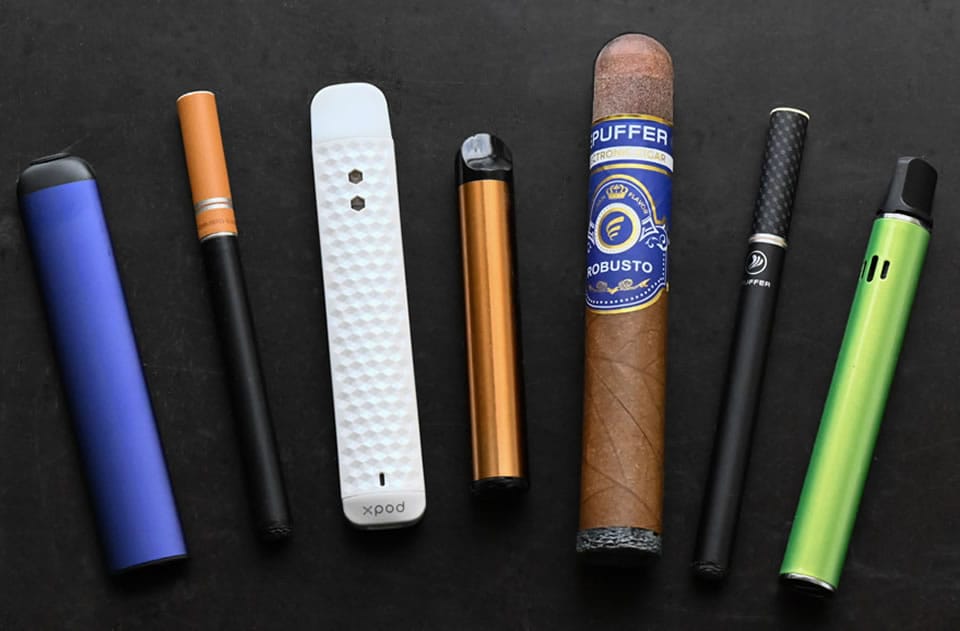
An infographic showing a side-by-side comparison of three types of vape devices: a true disposable vape, a rechargeable disposable vape, and a refillable pod system.
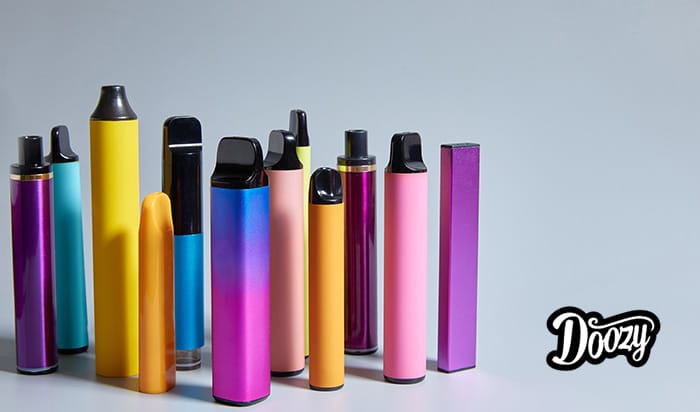
Vaping technology has evolved rapidly over recent years, giving adult consumers a wide array of device designs to choose from. If you have stepped into the world of vaping recently, you have likely encountered two primary formats: single-use devices and multi-use hardware. When weighing up the question of rechargeable vape vs disposable, it helps to understand the practical nuances between a true disposable vape, a modern rechargeable disposable vape, and a fully refillable open pod system. Each design caters to distinct habits, budgets, and operational preferences.
Navigating these product categories requires an understanding of how internal batteries function, how e-liquid is vaporised, and the long-term trade-offs regarding cost, flavour consistency, and electronic waste. This guide breaks down the essential mechanical, practical, and performance differences across these categories to help you understand which device style best matches your daily routine in 2026.
True Disposable Vape Mechanics: Pure Convenience with Zero Maintenance
A true disposable vape represents the most straightforward entry point into vaping. Engineered as a single, sealed unit, it arrives pre-charged and pre-filled with e-liquid. There are no buttons to configure, no coils to replace, and no charging ports to monitor. You simply draw on the mouthpiece to activate the internal sensor, which heats the integrated coil and vaporises the e-liquid.
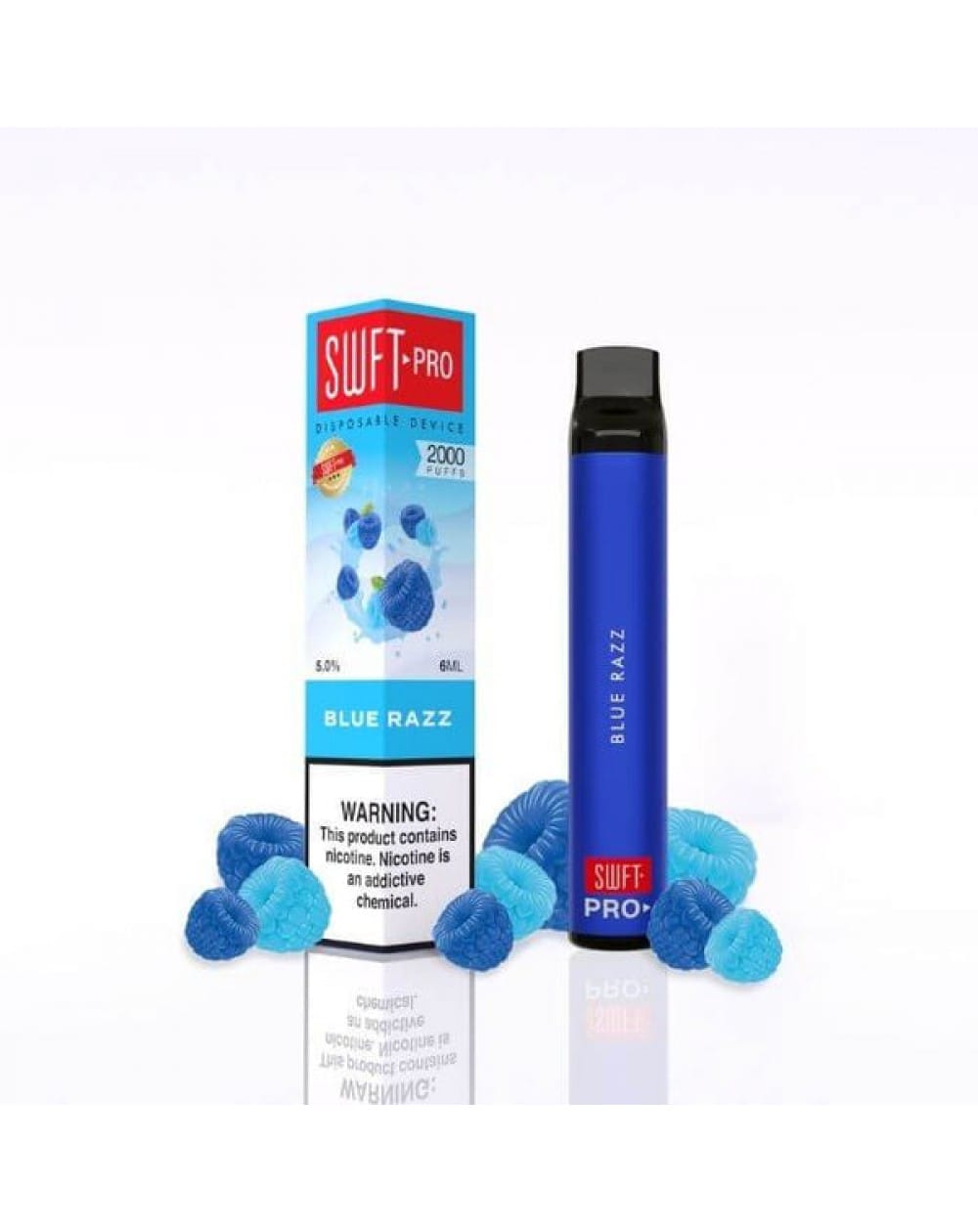
A fully rechargeable and refillable pod system, possibly disassembled to show the battery body and a removable, refillable pod or tank.
- TRUE DISPOSABLE VAPE
- Mouthpiece -> Pre-filled E-Liquid -> Fixed Coil
- Non-rechargeable Integrated Lithium Battery
The defining characteristic of a true disposable is that its operational lifespan is strictly limited by whichever resource runs out first: the internal battery charge or the e-liquid reservoir. Because the battery cannot be recharged via USB, the manufacturer must calibrate the battery capacity (typically measured in milliampere-hours, or mAh) to match the volume of e-liquid inside the chamber.
Once the vapour output drops or the indicator light blinks to signal a depleted cell, the entire unit has reached the end of its life cycle. This format eliminates all operational friction, making it popular for users who prioritise simplicity above all else. However, this sheer convenience comes at the expense of hardware longevity, as the entire casing, sensor, and lithium cell are discarded after a single cycle.
Rechargeable Disposable Vape and Refillable Pod Systems Explained
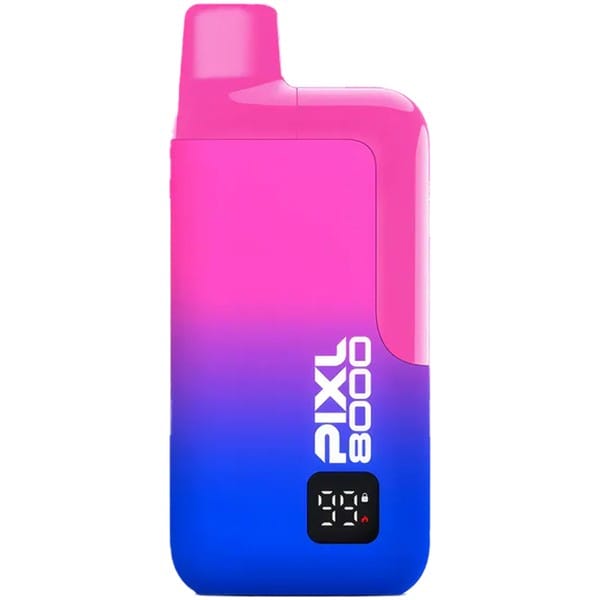
As consumers began demanding larger e-liquid capacities without carrying excessively bulky batteries, manufacturers introduced the rechargeable disposable vape. These hybrid units bridge the gap between traditional single-use devices and sustainable hardware.
- RECHARGEABLE DISPOSABLE VAPE
- Mouthpiece -> High-Capacity E-Liquid Chamber
- Integrated Mesh Coil -> Rechargeable USB-C Battery
A rechargeable disposable features a factory-sealed e-liquid reservoir—often holding significantly more liquid than an older, non-rechargeable model—paired with a smaller, rechargeable lithium-ion battery. Instead of discarding the device when the battery dies, you can simply plug it into a standard USB-C cable to restore power. Popular models such as the Alibarbar Ingot 9000 Ribena demonstrate this approach, allowing users to draw through the full reservoir without the vapour quality dropping off midway through the liquid supply. Once the e-liquid is completely finished, the device is discarded.
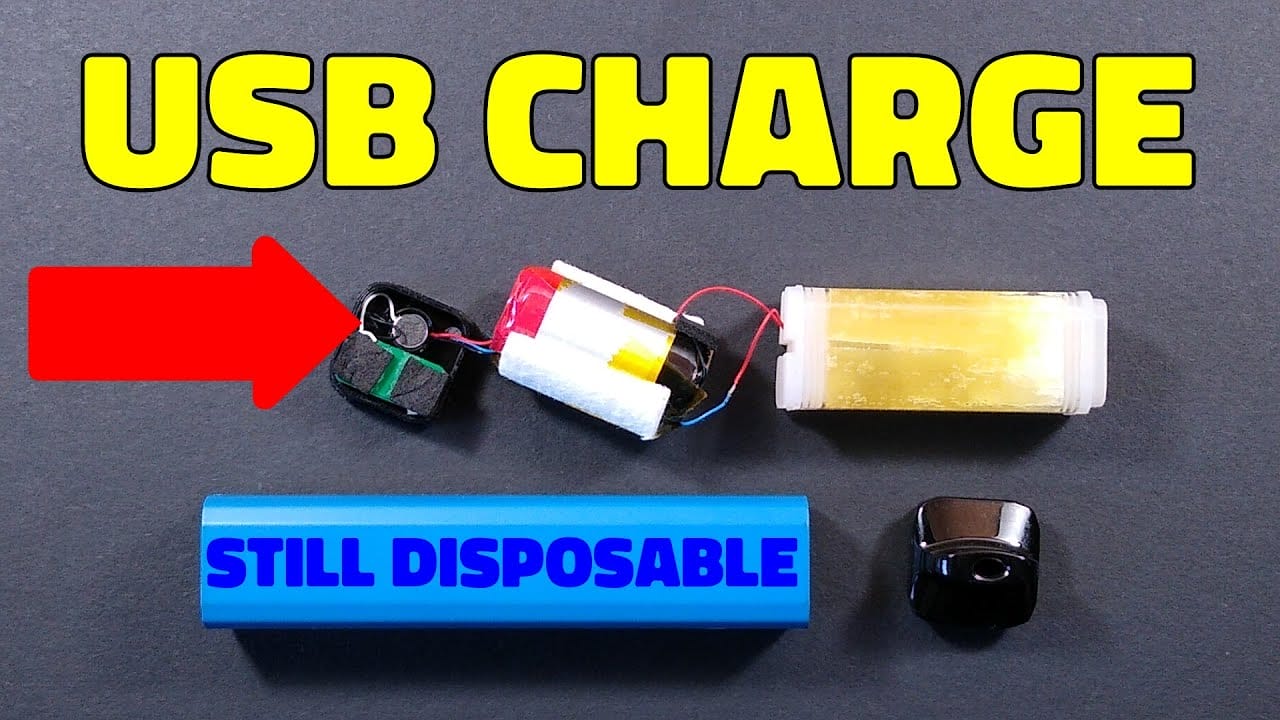
A person refilling their reusable vape pod system with bottled e-liquid, illustrating the long-term, sustainable, and customizable aspect of refillable vaping.
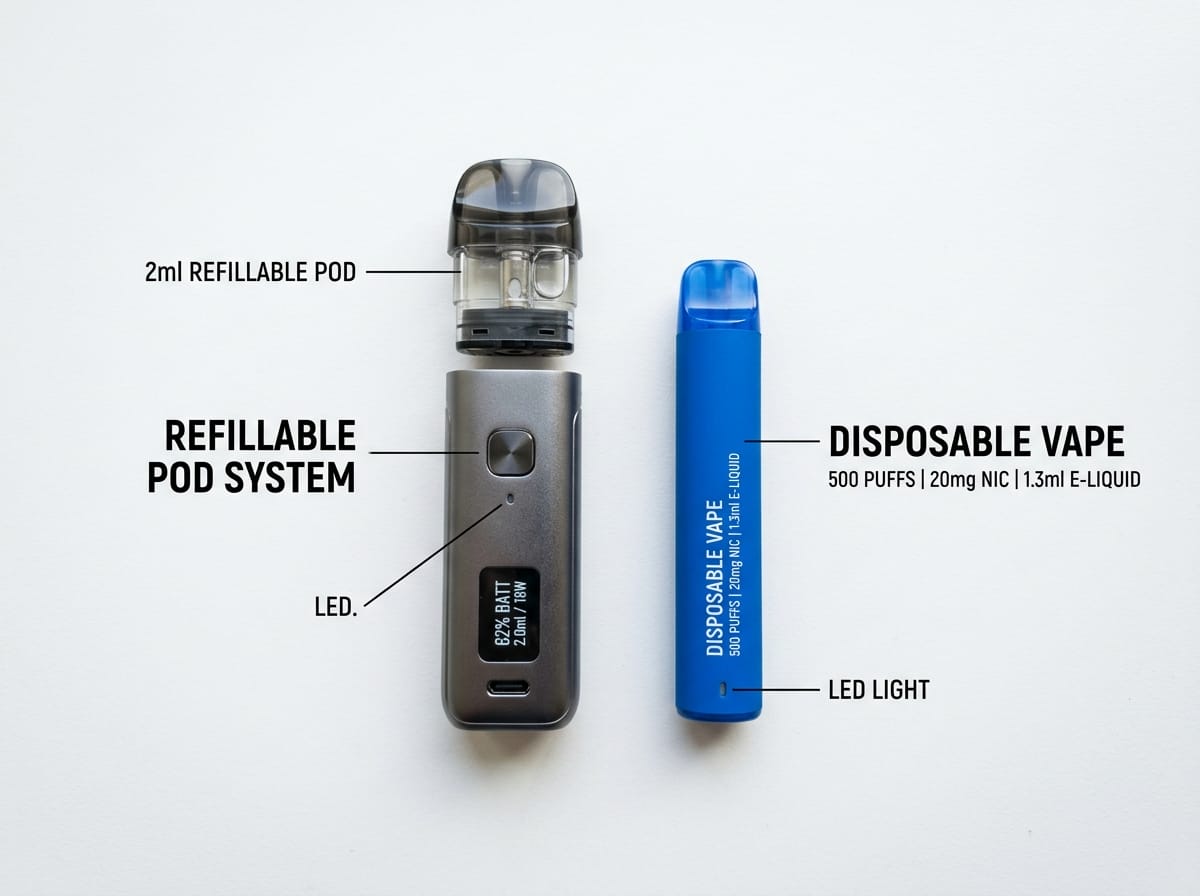
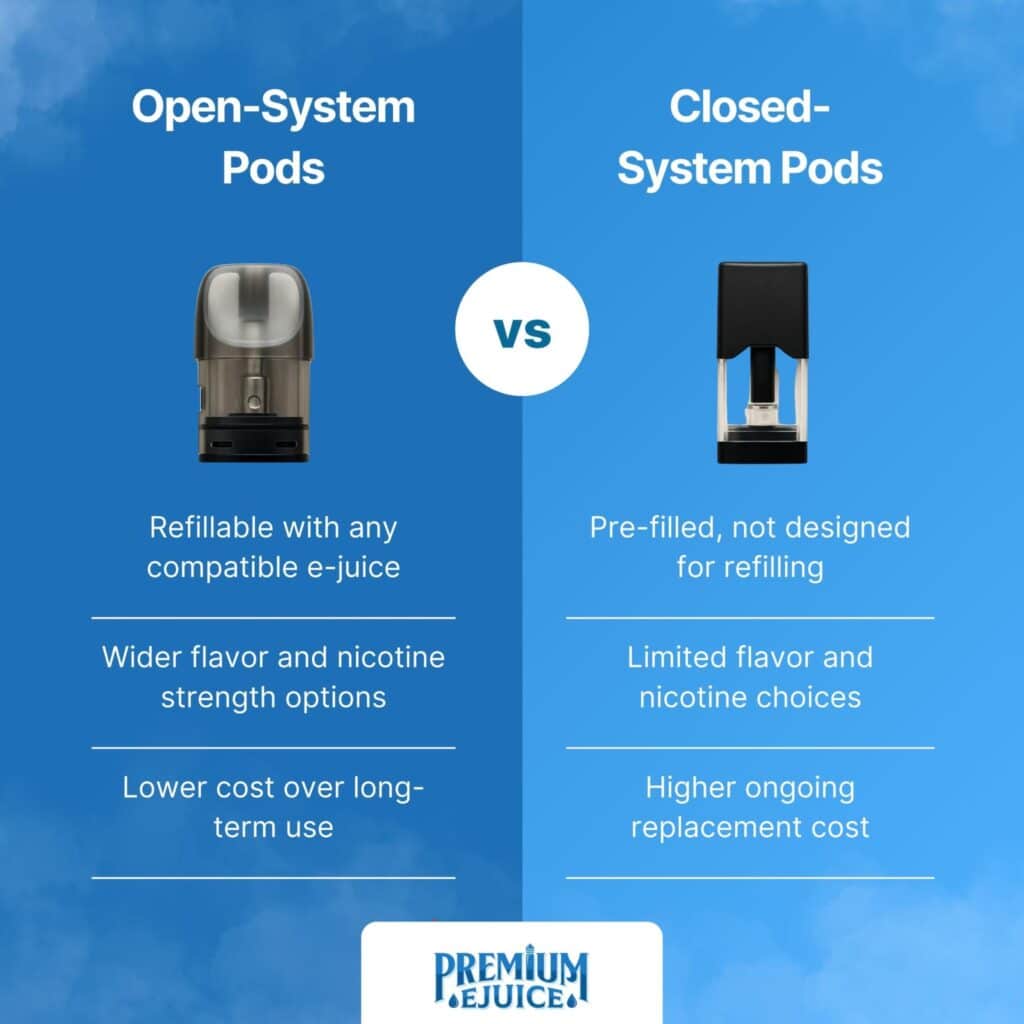
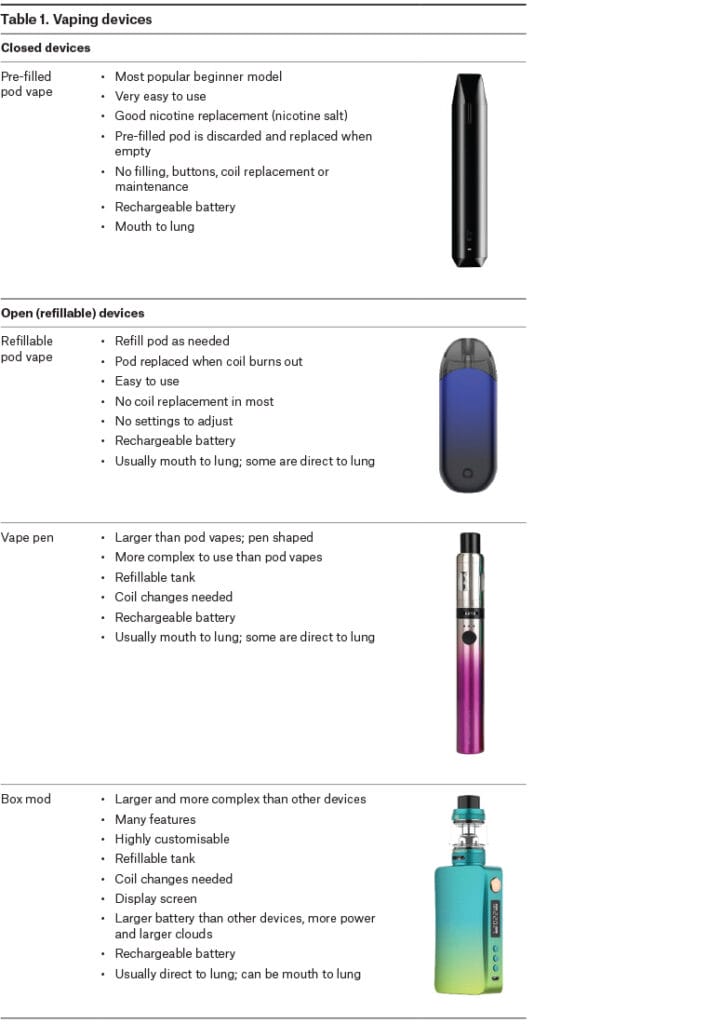
On the other end of the spectrum are fully rechargeable and refillable pod systems. These multi-use devices consist of two distinct parts:
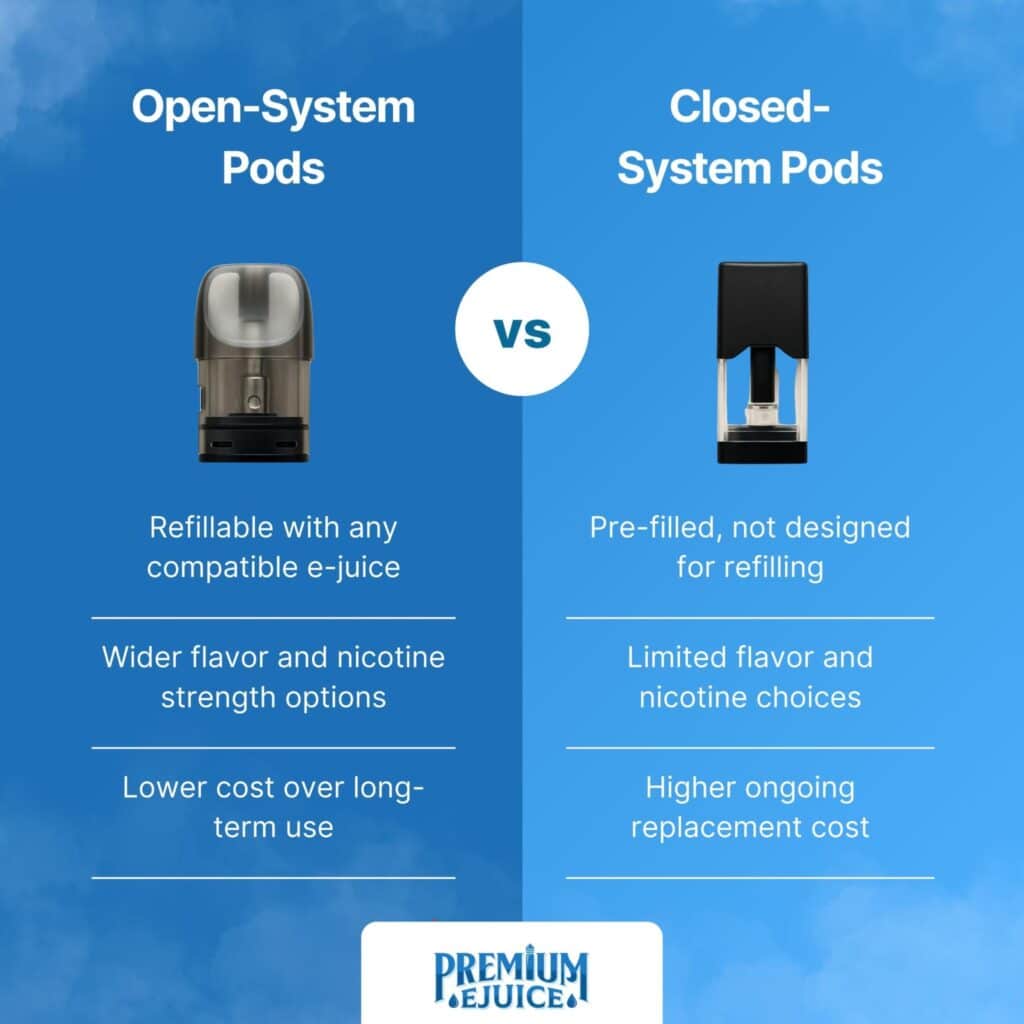
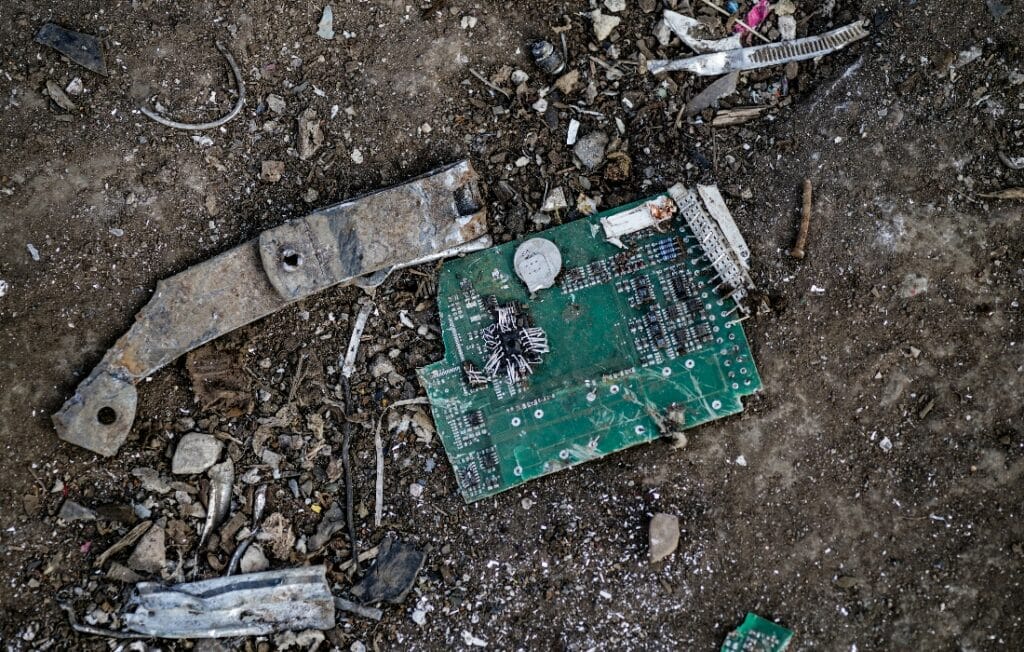
A pile of discarded disposable vape devices in a landfill or mixed with household rubbish, visually representing the problem of e-waste from single-use vapes.
- The Battery Body: A durable, rechargeable battery housing with built-in microprocessors, safety circuits, and charging ports.
- The Pod or Tank: A removable cartridge that can be manually refilled with bottled e-liquid multiple times and fitted with fresh replacement coils as needed.
Hardware specialists such as the Umin collection produce modern pod platforms designed for long-term daily use, where the main battery remains in service for months or years while the user only replaces internal consumables.
Rechargeable Vape vs Disposable: Key Differences in Cost, Performance, and Waste
To evaluate how these device classes perform over time, consider their practical features side by side.
| Feature / Metric | True Disposable Vape | Rechargeable Disposable Vape | Refillable / Rechargeable Pod System |
|---|---|---|---|
| Battery Reusability | None (single discharge cycle) | Multiple recharges (until e-liquid is empty) | Continuous long-term recharging (multi-year lifespan) |
| E-Liquid Management | Factory-sealed; non-refillable | Factory-sealed; non-refillable | Manually refillable with bottled e-liquids |
| Maintenance Demands | Zero maintenance | Periodic USB-C charging | Regular charging, pod refilling, and coil swapping |
| Airflow & Power Control | Fixed, non-adjustable draw | Usually fixed; occasional airflow toggle | Adjustable wattage and custom airflow sliders |
| Environmental Footprint | Highest e-waste per millilitre | Moderate e-waste per millilitre | Lowest overall waste (only coils/pods discarded) |
| Ongoing Operating Cost | Highest cost over time | Moderate cost over time | Lowest long-term running cost |
Flavour Delivery and Vapour Performance
The sensory experience differs noticeably between closed disposable systems and open rechargeable hardware.
Disposables are engineered for immediate gratification. Because the manufacturer pairs a single coil with a specific e-liquid recipe, they can calibrate the heating element precisely to deliver punchy sweetness and intense cooling sensations from the very first puff. These devices frequently utilise concentrated flavour formulations and synthetic cooling agents that create a crisp, highly saturated mouth-to-lung draw.
- VAPOUR PROFILE SPECTRUM
- True Disposable — Rechargeable Disp. — Refillable Pod
- • Ultra-sweet — • Consistent flavour — • Subtle, layered
- • Heavy cooling — • High saturation — • Broad liquid choice
- • Fixed tight draw — • USB-recharged power — • Full airflow tuning
Refillable rechargeable systems, by contrast, offer greater versatility. While a standard pod system may produce a slightly less overwhelming sugar hit than a factory-tuned disposable, it allows you to explore hundreds of standalone e-liquid formulations. You can tailor your experience by selecting different base ratios (vegetable glycerine versus propylene glycol), adjusting wattage output for warmer or cooler vapour, and switching between tight mouth-to-lung draws and airy direct-to-lung inhales.
Quality Control, Safety Protections, and Health Factors
Safety and device reliability are paramount considerations when evaluating any electronic nicotine delivery system. For consumers researching what is the healthiest vape setup, understanding hardware build quality is just as important as knowing what ingredients go into your e-liquid.
True disposables and low-cost single-use devices rely on compact internal components. Because they are designed to be thrown away, build budgets are minimal. If an unbranded disposable runs out of e-liquid before its internal battery dies, the heating element can scorch the internal wicking material, resulting in harsh, acrid dry hits.
- SAFETY & HARDWARE COMPARISON
- Disposables — | — Dedicated Rechargeables
- • Minimal internal chips | — • Overcharge protection
- • Fixed thermal output — | — • Short-circuit cut-offs
- • Sealed liquid chamber — | — • Low-voltage warnings
- • Risk of dry wick burn — | — • Automatic puff timers
Dedicated rechargeable devices house comprehensive microchip safeguards. These include automatic ten-second cut-offs, short-circuit protection, overcharge prevention, and low-voltage alerts. Furthermore, refillable setups give you direct control over the quality, manufacturing origin, and nicotine concentration of the bottled e-liquids you purchase, rather than relying entirely on a pre-filled, non-transparent reservoir.
Environmental Impact: Managing Electronic Waste in Australia
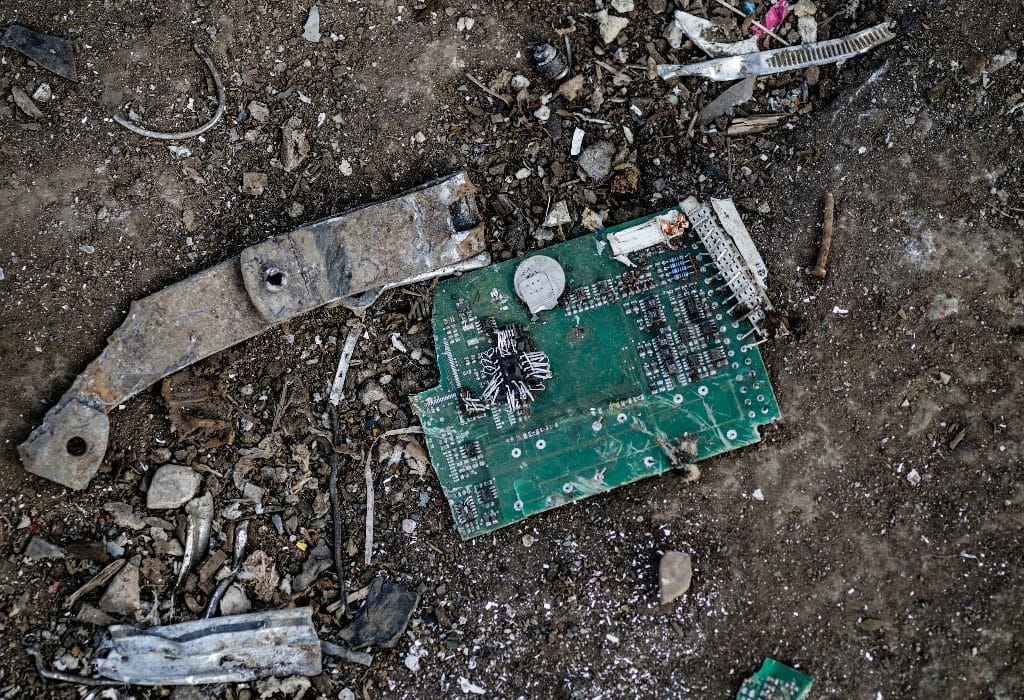
The environmental footprint of single-use vaping hardware has become a significant topic of discussion across Australia. Every true disposable vape contains a functional lithium-ion cell, copper wiring, a microchip sensor, and a rigid plastic or aluminium shell.
When a true disposable is thrown into household rubbish, that lithium cell goes straight to landfill, posing potential fire hazards in waste processing facilities and permanently wasting precious raw minerals. Even though a rechargeable disposable extends the life of the unit over several thousand puffs, the entire device—battery included—is still discarded once the liquid runs dry.
A rechargeable disposable vape device plugged into a USB-C charging cable, emphasizing its ability to be recharged.
DISPOSAL CYCLE COMPARISON:
Single-Use Disposable:  [ Buy ] ➔ [ Use ] ➔ [ Discard Whole Device + Battery ] (Frequent waste)
Rechargeable Pod System: [ Buy ] ➔ [ Refill/Recharge ] ➔ [ Discard Only Pod/Coil ] (Minimal waste)
Refillable rechargeable systems represent a much more responsible alternative for regular vapers. A single lithium-ion battery inside an open pod mod can be recharged hundreds of times over one to two years. The only recurring waste produced consists of tiny replacement coils or small plastic pods, drastically reducing your personal contribution to electronic waste.
Maintenance Breakdown: Is Convenience Worth the Long-Term Trade-Off?
Deciding between these formats ultimately comes down to balancing operational convenience against running costs and personal effort.
The Case for Disposables
- Zero Technical Knowledge Required: No priming coils, adjusting wattage, or cleaning threaded connections.
- Compact Portability: Lightweight and ready to slip into a pocket for travel or social outings.
- Flavour Consistency: Devices like the Alibarbar Ingot 9000 Black Forest provide rich, ready-to-vape flavour straight out of the packaging without any setup time.
The Case for Rechargeable Systems
- Substantial Long-Term Financial Savings: While buying a refillable starter kit requires a higher initial outlay, buying bottled e-liquid and replacement coils is dramatically cheaper over time than continually purchasing brand-new disposable units.
- Customisability: Complete control over vapour volume, draw resistance, and nicotine strengths.
- Reliability: Built-in battery indicators inform you exactly how much charge remains, avoiding unexpected shut-offs.
Choosing the Right Device for Your Routine
If you are an occasional user who values effortless operation without having to manage bottles of liquid, spare coils, and charging cords, a high-capacity rechargeable disposable provides a straightforward solution. It ensures you can access every drop of liquid without suffering the mid-cycle battery failure common to older, non-rechargeable formats.
However, if you are a daily vaper looking to reduce your ongoing expenses, minimise your environmental impact, and take full control over your vaping experience, investing in a refillable, rechargeable pod system is the smarter long-term path. By moving away from single-use plastics and batteries, you gain access to superior performance, better hardware reliability, and an infinitely wider selection of e-liquid profiles.
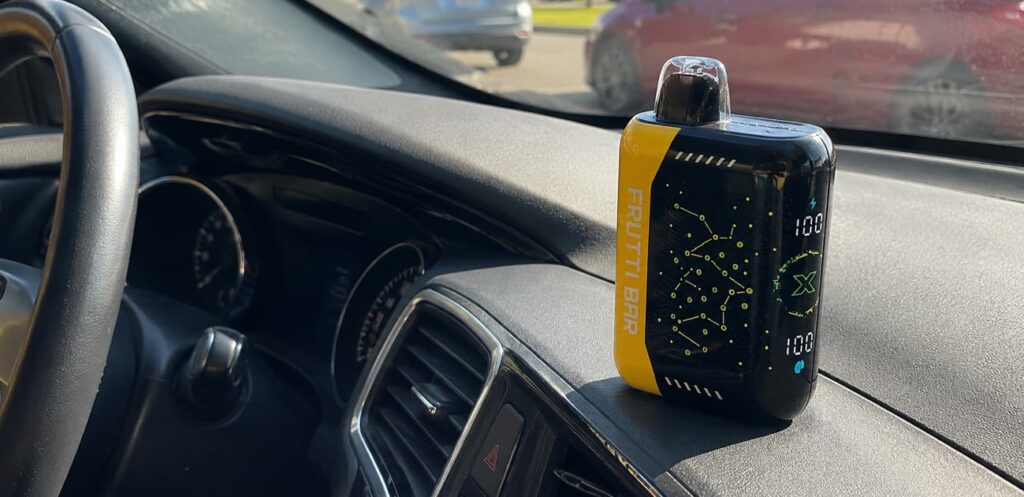
A sleek, compact true disposable vape device, highlighting its pre-filled and ready-to-use nature.



 UMIN SLICK PLUS 10000
 ALIBARBAR INGOT 9000
 IGET BAR PRO 10000
 IGET ONE 12000
 IGET BAR PLUS S3 10000
 IGET BAR PLUS S3 POD 10000
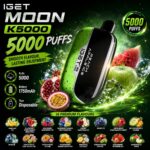 IGET MOON K5000
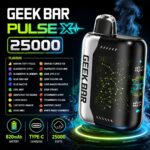 GEEK BAR PULSE X 25000