











I Dropped My Vape: What to Check Before Using a Dropped Vape on the Floor
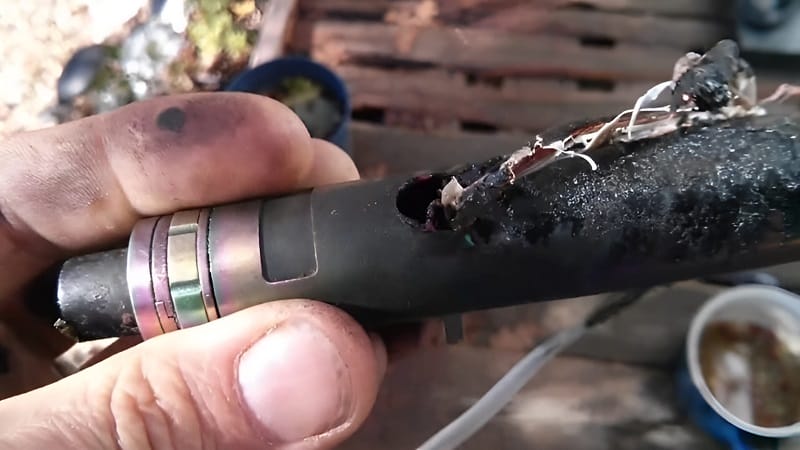
A damaged vape device lying on a floor, potentially cracked or dirty, emphasizing the need for inspection.
We have all experienced that split-second stomach drop: you reach for your pocket, fumble with your keys, or get out of the car, and your device goes clattering onto the bitumen or floorboards. When dealing with a dropped vape, the immediate temptation is simply to pick it up, give it a quick wipe on your jeans, and take a pull.
However, taking a puff from a vape dropped on floor surfaces without a proper inspection can lead to unpleasant or even hazardous surprises. From invisible structural fractures to dirty bacterial contamination, an impact can alter how your device functions. Whether you are holding a standard refillable kit or a damaged disposable vape, working through a systematic safety check before inhaling again will protect both your health and your pocketbook.
1. Hygiene First: Sanitising a Vape Dropped on Floor Surfaces
The most immediate concern after an accidental drop—especially in public spaces, on city footpaths, or in bathrooms—is biological and environmental contamination. Mouthpieces are naturally prone to collecting lint, dust, and microscopic dirt, and hitting a shared or outdoor floor compounds this instantly.
- VAPE DROPPED ONTO FLOOR
- DRY INDOOR FLOOR — DIRTY / WET / OUTDOOR
- • Inspect casing for cracks — • Disinfect mouthpiece
- • Wipe drip tip with sanitiser — • Check airflow holes for grit
- • Dry test airflow & seals — • Inspect for water intrusion
Sanitising the Drip Tip and Casing
Before putting the device anywhere near your lips, take the time to disinfect the mouthpiece properly:
- Use sanitising wipes or isopropyl alcohol: Gently wipe the exterior plastic or metal mouthpiece with an antibacterial or alcohol wipe. This removes surface microbes, road grime, and oils.
- Keep liquid out of the internal airway: Do not pour liquid cleaners directly onto the device or douse the opening. Squeeze excess liquid from the wipe beforehand so moisture does not drip straight down the central chimney into the atomiser coil or sensor.
- Inspect the mouthpiece aperture: Look straight down the airflow hole using a torch. Check for pocket fluff, grit, or crushed bitumen that may have lodged inside during impact. Inhaling loose dirt particles directly into your airways can cause harsh coughing and respiratory irritation.
2. Physical Inspection: Spotting a Damaged Disposable Vape Chassis
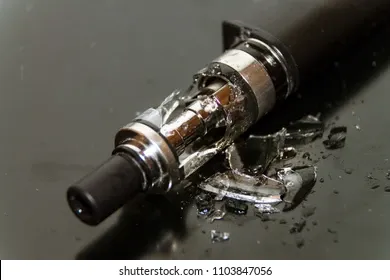
A close-up image of a disposable vape showing a visible crack or damage on its outer casing.
After sanitising the exterior, thoroughly examine the overall physical structure. Modern disposable vapes and compact pod units house delicate internal components inside a plastic or aluminium sleeve. A hard knock can dislodge internal seals or rupture the outer shell.
Checking for Structural Fractures and Leaks
- Examine the Outer Shell: Look closely along the seams and around the base of the device. Hairline cracks in the casing can allow air to bypass the intended intake channels.
- Inspect the Tank or Pod Window: If your device features a clear e-liquid viewing window, ensure the acrylic has not cracked. A cracked reservoir will quickly leak e-liquid across your hands and into the internal circuitry.
- Feel for Rattling Components: Gently shake the vape next to your ear. If you hear loose parts rattling inside, internal plastic brackets or the battery housing may have broken loose from the impact.
- Inspect Airflow Ports: Drops onto rough terrain often force dirt or grit directly into the tiny airflow intake holes at the bottom or sides. If the intake is clogged, draw resistance will spike noticeably. For more insight on troubleshooting strange airflow sounds or whistling after a drop, check our guide on why your vape is whistling and how to fix it.
A person using an alcohol wipe to clean the mouthpiece and exterior of a vape device.
3. Liquid Exposure: What to Do If Your Dropped Vape Lands in Water
A vape device partially submerged in a puddle of water or dropped into a sink, indicating liquid exposure.
Dropping a device onto a dry carpet or timber floor is one thing; dropping it into a puddle, sink, or washing machine is an entirely different issue. Liquid intrusion poses serious risks to both the electrical switchboard and the purity of your e-liquid.
- WAS THE DROP WATER-RELATED?
- SEALED DISPOSABLE — MODULAR POD SYSTEM
- • E-liquid contaminated? — • Discard wet pod/coil
- • Internal sensor ruined? — • Clean contacts thoroughly
- • WRITE OFF & RECYCLE — • Dry mod completely before use
The Hazard of Contaminated E-Liquid
If your vape lands in greywater, soapy water, or puddles containing motor run-off, moisture can easily enter through the mouthpiece or airflow holes.
- Never inhale contaminated vapour: Inhaling aerosolised detergents, greywater microbes, or road run-off represents a genuine respiratory hazard.
- Disposable units cannot be flushed: Because a disposable vape features a sealed, pre-saturated internal cotton wick, there is no way to wash out dirty liquid once it penetrates the internal reservoir. If a disposable vape has taken a swim in dirty water, write it off immediately.
4. Assessing the Damage: Post-Drop Evaluation Guide
To help you decide whether your device is safe to use or ready for the bin, use this practical checklist to evaluate the severity of the drop:
| Impact Scenario | Potential Internal / External Damage | Immediate Action Required | Safety Verdict |
|---|---|---|---|
| Light drop on carpet or timber | Minor cosmetic scuffing; no structural disruption. | Sanitise mouthpiece; check airflow path for lint. | Safe to use once cleaned. |
| Hard drop on concrete or bitumen | Cracked casing; cracked viewing window; dislodged battery cradle. | Inspect for fluid leaks; listen for loose rattles; check airflow holes. | Use with caution; discard if leaking or rattling. |
| Submerged in clean tap water | Shorted draw sensor; battery contact moisture; diluted e-liquid. | Dry thoroughly; modular pods require coil replacement; disposables should be retired. | High risk; disposables must be discarded. |
| Dropped in dirty puddle or soapy water | Chemical or microbial contamination of the e-liquid wick and coil. | Do not vape; external wiping cannot clean internal wicks. | Unsafe; replace immediately. |
| Impact causing autofiring or overheating | Jammed pneumatic draw switch; damaged internal circuit board. | Place on a non-flammable surface; do not charge or inhale. | Critical failure; dispose of safely. |
5. Functional Checks: Testing a Dropped Vape Safely
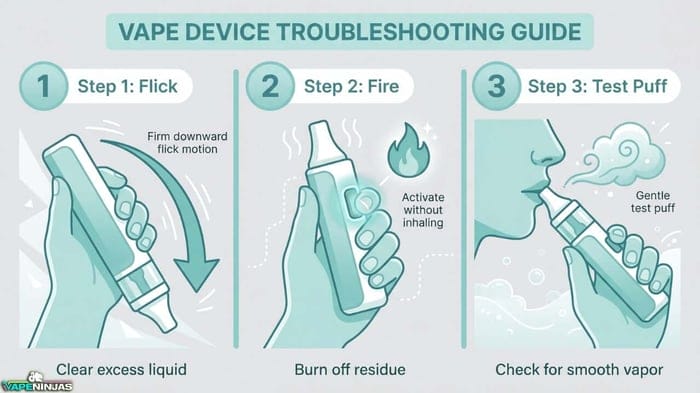
Once you are confident the device is clean, structurally sound, and free from internal contamination, perform a careful functional check before returning to regular use.
Test the Draw and Sensor Response
- Take a gentle test puff: Do not take a massive direct-to-lung draw straight away. Take a tiny primer puff to confirm the auto-draw sensor responds smoothly without requiring excessive suction.
- Listen for abnormal sounds: A subtle crackle from the coil vaporising liquid is standard, but loud sputtering, continuous hissing, or high-pitched air leaks indicate compromised internal seals.
- Check for autofiring: After taking a puff, watch the indicator LED and listen closely. The device should immediately stop firing the instant you stop drawing. If the light stays illuminated or the coil continues to sizzle on its own, the internal pneumatic sensor has jammed. Set it down on a non-flammable surface and retire the unit.
- Monitor device temperature: Hold the vape in your hand for several minutes after testing. If the battery casing feels unusually warm or hot without being used, the internal cell may have sustained internal damage.
If your device failed the drop test and needs replacing, choosing a sturdy, well-engineered option such as the Alibarbar Ingot 9000 Ribena provides reliable everyday performance in an ergonomic format. Alternatively, rich flavour profiles like the Alibarbar Ingot 9000 Black Forest offer pre-filled convenience if you need a dependable replacement after an unfortunate mishap.
- STEP-BY-STEP FUNCTIONAL TESTING:
- 1 Primer Puff — ► — Take a short, 1-second gentle draw.
- 2 Check Cut-Off — ► — Ensure the LED switches off instantly.
- 3 Check Temp — ► — Feel the body to ensure no abnormal heat.
- 4 Taste Test — ► — Confirm flavour is clean, not burnt or metallic.
6. Responsible Disposal of a Damaged Disposable Vape in Australia
A close-up of a vape pod or tank window with a visible crack and potential e-liquid leakage.
If your vape has cracked wide open, fallen into dirty water, or displays electrical faults, attempting to salvage it is not worth the risk. Because all disposable vapes contain integrated lithium-ion batteries, disposing of them properly is essential.
Avoid Household Rubbish Bins
Never toss a damaged vape or lithium battery directly into your general household wheelie bin or kerbside recycling bin. When household rubbish is compacted inside waste collection trucks, damaged lithium-ion batteries can easily ignite, creating serious fire hazards for local waste workers.
Utilise Dedicated Battery Recycling Schemes
- Community Recycling Depots: Drop your retired vapes off at local council community recycling centres or designated electronic waste drop-off points.
- B-cycle Collection Hubs: Major supermarkets and electronics retailers across Australia host dedicated B-cycle drop-off bins designed specifically for the safe collection and recycling of lithium-powered consumer products.
Summary Checklist: Before You Vape Again
Before you take another draw from a dropped device, run through this quick final mental checklist:
- Has the mouthpiece been thoroughly disinfected with a sanitising wipe?
- Is the airflow pathway completely clear of dirt, pocket lint, and road grit?
- Is the casing completely free of deep cracks, loose rattles, or leaking e-liquid?
- Did the vape avoid contact with water, detergents, or puddles?
- Does the auto-draw sensor cut off instantly without autofiring or excessive heat?
Taking two minutes to check these points will ensure you avoid inhaling nasty contaminants and keep your daily vaping routine safe, clean, and enjoyable.



 UMIN SLICK PLUS 10000
 ALIBARBAR INGOT 9000
 IGET BAR PRO 10000
 IGET ONE 12000
 IGET BAR PLUS S3 10000
 IGET BAR PLUS S3 POD 10000
 IGET MOON K5000
 GEEK BAR PULSE X 25000